2026 Best Ultrasonic Battery Welder Buying Guide
Choosing the right Ultrasonic Battery Welder in 2026 requires more than comparing prices or advertised power. Battery manufacturers now work with lithium-ion cells, pouch formats, cylindrical cases, and advanced tab materials. Each application demands different welding pressure, vibration frequency, energy control, and fixture design. A machine that performs well on thin nickel tabs may struggle with copper or aluminum connections.
This buying guide focuses on practical decisions. It examines weld consistency, cycle time, electrode access, machine controls, maintenance needs, and supplier support. In daily production, small details matter. A misaligned fixture can create weak joints. Excessive energy may damage delicate cells. Poor cooling can reduce output before the shift ends. These problems are easy to overlook.
Real testing remains essential.
Reliable buyers should request sample welds, cross-section analysis, pull testing, and repeatability data. They should also verify operator training, emergency controls, electrical protection, and documentation. Certifications can support confidence, but they do not replace independent inspection. Specifications sometimes look impressive. They may still hide important limitations.
There is no universal best machine. Battery chemistry, production volume, cell geometry, and budget change the answer. This guide may not predict every emerging battery design, and that limitation deserves attention. Still, careful comparison can reduce costly mistakes. A trustworthy supplier should explain both strengths and weaknesses, not only present polished demonstrations. By combining engineering evidence with hands-on evaluation, manufacturers can select an Ultrasonic Battery Welder that supports stable production and safer long-term operation.
Ultrasonic Battery Welding Basics: 20–40 kHz Frequencies and Energy Transfer
2026 Best Ultrasonic Battery Welder Buying Guide: Ultrasonic Battery Welding Basics
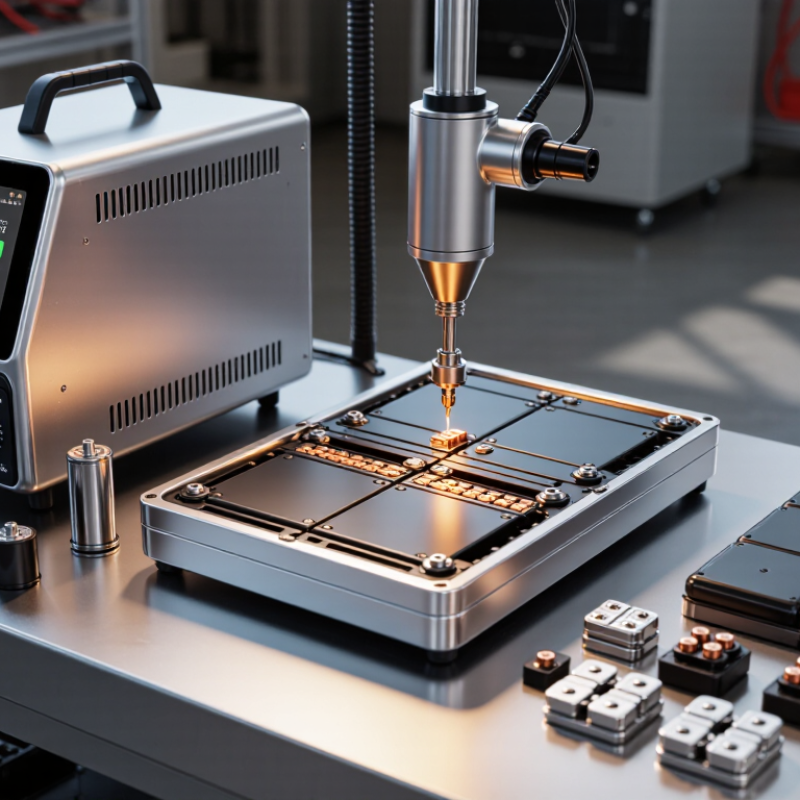
Ultrasonic battery welding uses mechanical vibration, not melting, to join tabs, foils, and terminals. Most industrial systems operate between 20 and 40 kHz. A sonotrode presses the materials together while rapid vibration disrupts surface oxides. Energy then transfers through friction and plastic deformation. The weld forms in milliseconds.
A 20 kHz welder usually delivers stronger amplitude and suits thicker metal stacks. A 35–40 kHz system can provide finer control for thin foils and compact battery packs. Frequency alone does not determine quality. Weld force, amplitude, trigger pressure, stack height, and welding time must work together. Small changes matter.
The International Energy Agency reported that global electric-vehicle battery demand exceeded 750 GWh in 2023. This scale increases pressure for repeatable joining and lower production waste. The U.S. Department of Energy also identifies advanced manufacturing controls as important for battery cost and reliability. These reports support careful process monitoring, although they do not replace weld-specific testing.
A practical buying check should include force feedback, amplitude adjustment, energy monitoring, and data logging. Inspect cross-sections, peel strength, electrical resistance, and heat-affected areas. A shiny weld can still be weak. That is easy to miss.
I would not select a machine by frequency alone. Tool geometry and material compatibility often matter more. Copper, aluminum, nickel, and coated foils respond differently. Published laboratory values may also change on a factory line. Real production trials remain necessary.
2026 Best Ultrasonic Battery Welder Buying Guide
Ultrasonic Battery Welding Basics: 20–40 kHz Frequencies and Energy Transfer
This chart compares common ultrasonic welding frequencies with their calculated acoustic cycle period and wavelength in aluminum. The wavelength is calculated using a longitudinal sound speed of approximately 6,320 m/s in aluminum: wavelength = sound speed ÷ frequency. Higher frequencies produce shorter cycles and shorter wavelengths, while actual welding energy transfer also depends on amplitude, clamping force, weld time, tool design, joint condition, and material stack-up.
Key Specifications: 0.1–5.0 kN Force, 1–20 ms Weld Times, and Power
In a 2026 ultrasonic battery welder, force control deserves close attention. The useful range is 0.1–5.0 kN, but maximum force is not automatically better. Low force suits delicate tabs, while higher force can stabilize thicker joints. Watch the horn during setup. A stable fixture should hold the cell without crushing its surface. I measure pressure consistency across repeated cycles, not only the first weld. Small alignment changes can create weak edges or visible marks.
Weld time commonly spans 1–20 ms. Short pulses reduce heat exposure, yet they may leave incomplete bonding when surfaces are contaminated. Longer pulses can improve energy transfer, but excessive time may discolor metal or stress the cell. I inspect peel strength, weld appearance, and electrical resistance after each setting change. Do not judge quality by appearance alone. A bright joint can still fail under vibration.
Power specifications need equal scrutiny. Check rated input power, peak output, frequency stability, and duty cycle. A machine with high peak power may perform poorly if its cooling system is undersized. For production use, compare cycle recovery and power draw at the selected force and time. I once focused too heavily on nominal power and overlooked inconsistent results between batches. That mistake changed my buying checklist. Ask for test data using your actual tab and cell materials. Also verify controls, calibration records, guarding, and service documentation before purchase.
Battery Compatibility: Nickel, Copper, Aluminum Tabs and 18650–4680 Cells
Choosing an ultrasonic battery welder starts with tab compatibility, not headline power. Nickel tabs usually weld predictably, while copper and aluminum demand tighter control. Copper conducts heat away quickly. Aluminum can form oxide layers and needs suitable surface preparation.
Cell size also changes the job. An 18650 cell has a smaller contact area than a 4680 cell. That affects horn pressure, vibration, fixture design, and weld spacing. A practical machine should support adjustable energy, amplitude, pressure, and weld time. Ask for validated settings across both formats. Do not assume one recipe fits all.
The International Energy Agency reported that electric-vehicle battery demand reached about 750 GWh in 2023, rising roughly 40% year over year. That growth increases pressure for repeatable joining and traceable quality checks.
BloombergNEF reported an average lithium-ion pack price of 115 dollars per kWh in 2024, making damaged cells and weak tabs costly mistakes.
Inspect cross-sections, pull strength, heat marks, and electrical resistance during trials. Small tests matter.
Some specifications look impressive but remain vague. A welder rated for copper may still struggle with thick copper tabs. I would test real tab thicknesses before purchasing. That step is easy to skip. It should not be.
Safety and Compliance: IEC 62133-2, UN 38.3, and ISO 12100 Requirements
Selecting an ultrasonic battery welder in 2026 requires more than checking weld speed or horn frequency. The IEA’s Global EV Outlook 2024 reported that global electric vehicle battery demand exceeded 750 GWh in 2023. That scale increases pressure on manufacturers to prove safety at every production stage.
IEC 62133-2 focuses on the safe design and testing of rechargeable lithium cells and batteries. A welder does not create compliance by itself. It must control weld energy, pressure, amplitude, and cycle time without damaging separators or causing hidden cell deformation. Ask for traceable process records. Tiny defects can become serious failures later. I have seen operators trust visual welds too quickly; that is a weak inspection habit.
UN 38.3 covers transport testing, including vibration, shock, altitude, temperature cycling, and external short circuit conditions. These tests apply to the finished battery, not merely the welding machine. ISO 12100 requires a documented machinery risk assessment, covering pinch points, unexpected starts, noise, stored energy, and maintenance access. Physical guards matter. So do interlocks.
A practical buying review should examine calibration evidence, alarm history, weld-strength sampling, and emergency-stop response. The International Energy Agency also identifies manufacturing quality as a key factor in battery safety and reliability. Still, test reports can be incomplete, outdated, or poorly matched to the final battery design. Verify the cell type, pack configuration, production conditions, and responsible testing laboratory before approval.
2026 Buying Criteria: Weld Quality, Cycle Rates, Controls, and Total Cost
For 2026, ultrasonic battery welder selection should begin with weld quality, not purchase price. The IEA’s Global EV Outlook 2024 reported 750 GWh of electric-vehicle battery demand in 2023, a 40% annual increase. This growth raises pressure on repeatable joints, especially across copper, aluminum, and coated tabs. Inspect cross-sections, pull strength, electrical resistance, and heat-affected areas during trials. A shiny weld is not proof of reliability.
Cycle rate must match the real line, including loading, clamping, inspection, and tool changes. Ask for measured takt time, not only the advertised welding duration. Controls should record amplitude, energy, force, displacement, and alarm history for every joint. The U.S. Department of Energy’s Battery Manufacturing Technology Roadmap emphasizes process monitoring, traceability, and defect prevention. That makes data access a production requirement. Fancy screens are not enough.
Total cost includes horns, fixtures, calibration, rejected cells, training, software, and downtime. Request a twelve-month ownership estimate using your actual production volume. A lower-priced machine can become expensive when tooling wears quickly. I would also test performance after extended cycling, not just during a perfect demonstration. Some evaluation plans remain too clean. Real factories contain dust, operator variation, material changes, and rushed maintenance. Build those weaknesses into the acceptance test.