Top 10 Benefits of Choosing an Ultrasonic Welder Factory for Your Business
In today's competitive manufacturing landscape, partnering with an Ultrasonic Welder Factory can substantially boost your business. A recent industry report shows that ultrasonic welding technology has grown by 8% annually, driven by its efficiency and precision. Manufacturers now prioritize reliable solutions, and ultrasonic welding offers high-quality bonding without needing adhesives.
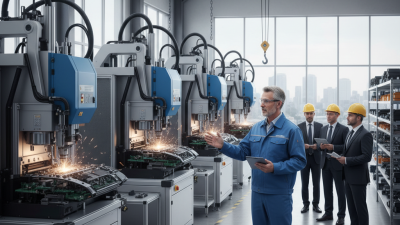
Selecting an established Ultrasonic Welder Factory is crucial. These factories are equipped with skilled professionals and advanced machinery. According to a study by the International Journal of Advanced Manufacturing Technology, companies that adopt ultrasonic welding experience up to 30% increased production efficiency. However, not all factories meet this standard. It's vital to assess their track record and technology.
Despite the benefits, challenges remain. Not every Ultrasonic Welder Factory provides consistent quality. Companies must conduct due diligence to avoid subpar results. Businesses should weigh the pros and cons carefully. The right factory can enhance operations significantly, but a hasty decision can lead to costly setbacks.
Advantages of Ultrasonic Welding Technology in Manufacturing
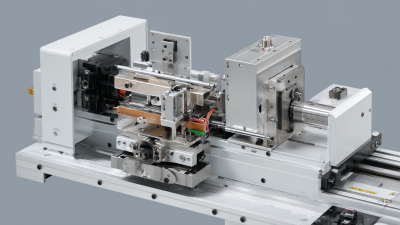
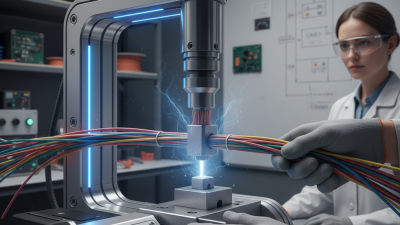
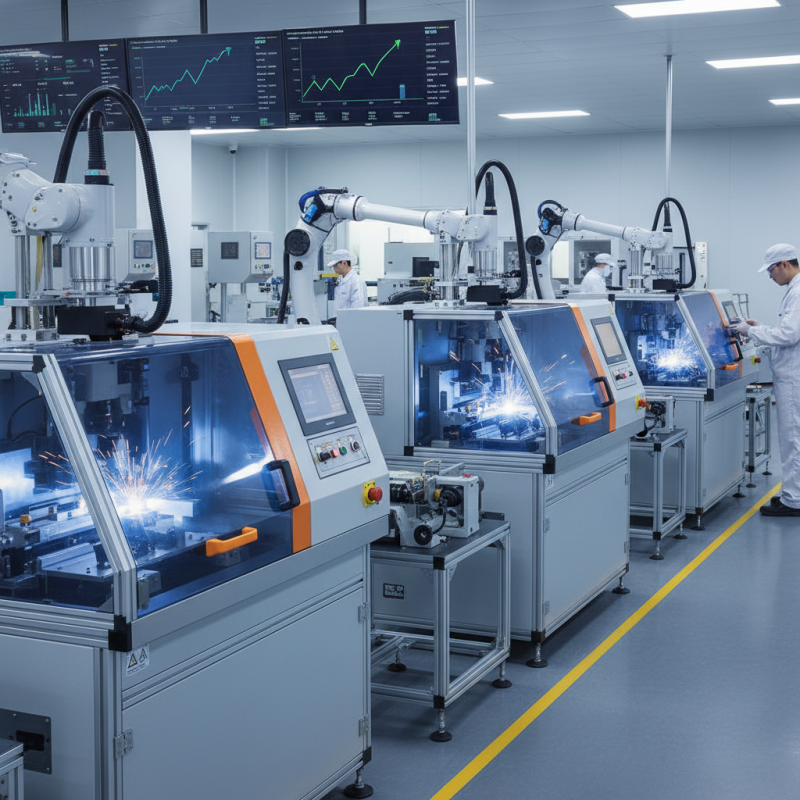
Ultrasonic welding technology is a game changer in manufacturing. It uses high-frequency ultrasonic vibrations to join materials without the need for additional adhesives or heat. This process ensures strong, durable bonds that can withstand significant stress. Companies adopting this technology often experience higher efficiency. They can save time and resources, which leads to a boost in overall productivity.
The advantages extend beyond just efficiency. Ultrasonic welding is also environmentally friendly. It minimizes waste by reducing the need for bonding agents and excess material. This method is particularly useful for delicate components, as it produces minimal thermal impact. However, the setup and maintenance of ultrasonic welders require skilled operators. This means businesses must invest in training and support.
Some limitations exist. For instance, not all materials respond well to ultrasonic welding. Understanding material compatibility is crucial to maximize the process's benefits. Businesses should carefully evaluate their specific needs before making a decision. This reflection can lead to better outcomes and support sustainable practices in manufacturing.
Top 10 Benefits of Choosing an Ultrasonic Welder Factory for Your Business
Enhanced Product Quality Through Ultrasonic Welding Processes
Ultrasonic welding is a process renowned for enhancing product quality across various industries. This technique uses high-frequency ultrasonic vibrations to join materials, typically plastics and metals. According to a report by the International Journal of Advanced Manufacturing Technology, ultrasonic welding improves joint strength by up to 50% compared to traditional welding methods. This significant improvement results in end products that are more durable and reliable.
The precision of ultrasonic welding reduces defects, leading to fewer rejects in production. In fact, the American Welding Society emphasizes that ultrasonic processes can minimize the overall defect rate to below 1%. This accuracy not only enhances product quality but also lowers material waste. However, achieving such efficacy requires a deep understanding of the welding parameters. Manufacturers must experiment with factors like amplitude and pressure, which can be challenging.
Moreover, while ultrasonic welding offers many benefits, it’s essential to acknowledge its limitations. Not all materials are suitable for this process, necessitating a thorough evaluation before implementation. Variability in material composition can affect the welding outcome. This nuanced understanding is vital for any business aiming to adopt ultrasonic welding technology effectively.
Cost Efficiency: Saving Money with Ultrasonic Welding Solutions
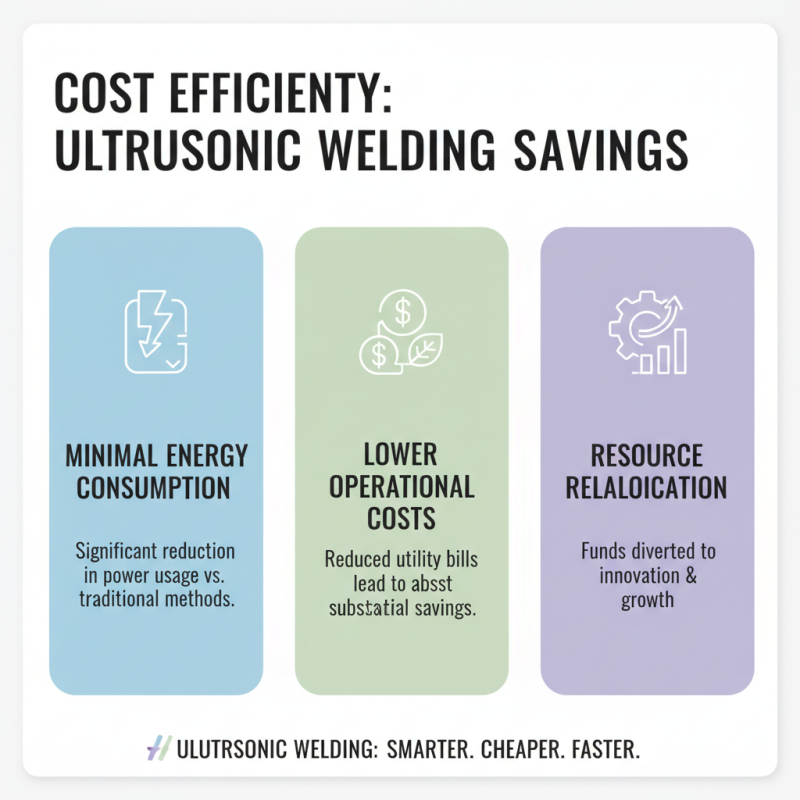
Ultrasonic welding is a game-changer for many businesses. It offers substantial cost efficiency, which is crucial in today’s competitive market. This technology requires minimal energy compared to traditional methods. The reduction in energy usage translates to lower operational costs over time. Companies can benefit from reduced utility bills, allowing them to reallocate funds to other projects.
Using ultrasonic welding solutions can decrease material wastage significantly. Traditional welding methods often lead to excess scrap, adding to production costs. In contrast, ultrasonic welding minimizes waste by providing precise bonding. This precision ensures that resources are used effectively. Additionally, less wasted material means more sustainable operations, which is increasingly important for modern consumers.
Finding the right ultrasonic welder factory is essential. A reliable partner can provide customized solutions that cater to your specific needs. Collaboration with experienced manufacturers brings expertise to the table. However, some businesses might overlook the importance of thorough research. Choosing a factory based solely on price can lead to hidden costs. It's vital to evaluate quality, support, and long-term benefits to make a wise decision.
Versatility in Material Compatibility with Ultrasonic Welders
Ultrasonic welders are known for their versatility in material compatibility. This makes them an ideal choice for various industries. From plastics to metals, these machines can efficiently bond different materials. This flexibility allows businesses to diversify their product offerings. It enables a quicker adaptation to market demands. Companies often find themselves needing to work with multiple materials to stay competitive.
The process of ultrasonic welding generates localized heat. This occurs without requiring additional adhesives or solvents. Not every factory can provide this technology. Some may struggle to achieve consistent quality across all materials.
A reliable factory invests in advanced ultrasonic technology. This investment results in high-quality welds, reducing production errors. A trustworthy source will also offer support in optimizing the welding process for specific materials.
However, not all materials bond well under ultrasonic welding. Some materials might require experimentation. Businesses should be prepared for trials to refine their techniques. This is part of the learning curve. Understanding material properties is essential for achieving effective results. The right factory will help guide you through this challenging process.
Streamlined Production: Boosting Efficiency with Ultrasonic Welders
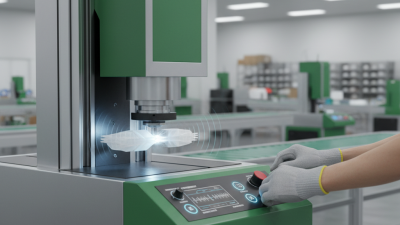
Ultrasonic welding technology can significantly enhance production efficiency. By utilizing high-frequency sound waves, this method creates a strong bond between materials in a fraction of the time compared to traditional welding. This rapid bonding process means fewer bottlenecks on the production line. A factory equipped with ultrasonic welders is capable of handling large volumes while maintaining consistent quality.
In addition, precision is a major advantage of ultrasonic welding. This process allows for fine control over the weld, reducing the risk of defects. In a rigorous production environment, even minor flaws can lead to significant setbacks. Ultrasonic welders can minimize these issues, ensuring that each product meets high standards. However, it’s important to conduct regular maintenance and training. Ignoring these aspects can lead to inefficiencies and complications.
Moreover, ultrasonic welding eliminates the need for additional materials, such as adhesives. This not only cuts costs but also simplifies the production process. Businesses can benefit from less waste and a more eco-friendly approach. Nonetheless, integrating ultrasonic welding requires a learning curve. Organizations must understand the technology fully to maximize its potential. Overcoming initial challenges can lead to improved workflows and greater profitability in the long run.