Top Benefits of Using a Handheld Ultrasonic Welder in China?
In recent years, the Ultrasonic Welder Handheld has gained traction in diverse industries across China. This device simplifies complex welding tasks, making it essential for small businesses and manufacturers. By utilizing high-frequency sound waves, it can join materials quickly and effectively, which is critical for today’s fast-paced production environments.
The advantages of using an Ultrasonic Welder Handheld are numerous. It offers precision, reduces labor costs, and improves production efficiency. Companies can achieve a cleaner and more reliable weld without needing additional materials. However, some users may struggle to fully harness its capabilities. Training is crucial for optimizing its use. Feedback from users often points to a learning curve that must be addressed.
As industries evolve, the demand for innovative tools like the Ultrasonic Welder Handheld will likely rise. Yet, potential buyers are advised to consider their specific needs before investing. Understanding the product's limits is essential for maximizing its benefits. Embracing this technology can lead to significant improvements, provided businesses are willing to adapt and learn.
Advantages of Handheld Ultrasonic Welders in the Chinese Market
Handheld ultrasonic welders are reshaping various industries in China, from automotive to electronics. Their growing popularity is backed by significant market research. According to a report by Qianzhan Industry Research Institute, the ultrasonic welding market is projected to reach approximately $150 million by 2025 in China. This trend highlights the increasing reliance on these tools for efficient manufacturing processes.
One notable advantage of handheld ultrasonic welders is their versatility. These devices can join different materials, including plastics and metals, making them suitable for diverse applications. This flexibility is particularly beneficial in a rapidly evolving market. However, it’s important to note that improper usage can lead to defects in weld quality. Training operators effectively is crucial to maximizing the benefits of these welders.
Another key benefit is speed. Handheld ultrasonic welders significantly reduce cycle times compared to traditional welding methods. Some reports indicate that ultrasonic welding can cut assembly time by up to 50%. However, achieving optimal performance requires careful calibration and maintenance. If not properly managed, inconsistencies may arise, leading to production delays. This highlights the need for manufacturers to prioritize quality control alongside automation.
Top Benefits of Using a Handheld Ultrasonic Welder in China
| Benefit |
Description |
Applications |
Market Demand |
| Portability |
Lightweight and easy to carry, suitable for various working environments. |
Automotive, textiles, electronics repair. |
High, due to diverse usage in different industries. |
| Efficiency |
Quick welding times, increasing overall productivity. |
Manufacturing, assembly lines. |
Growing, as companies seek faster production methods. |
| Cost-Effectiveness |
Reduces the need for additional tools and materials. |
Plastic welding, packaging. |
Stable, owing to continuous demand for cost-saving solutions. |
| Quality of Welds |
Creates strong, durable bonds without defects. |
Consumer products, medical devices. |
Increasing, especially in precision-based industries. |
| Versatility |
Can be used on a variety of materials and thicknesses. |
Textiles, automotive parts, electronics. |
High, as industries continue to innovate with new materials. |
Key Industries Utilizing Handheld Ultrasonic Welders in China
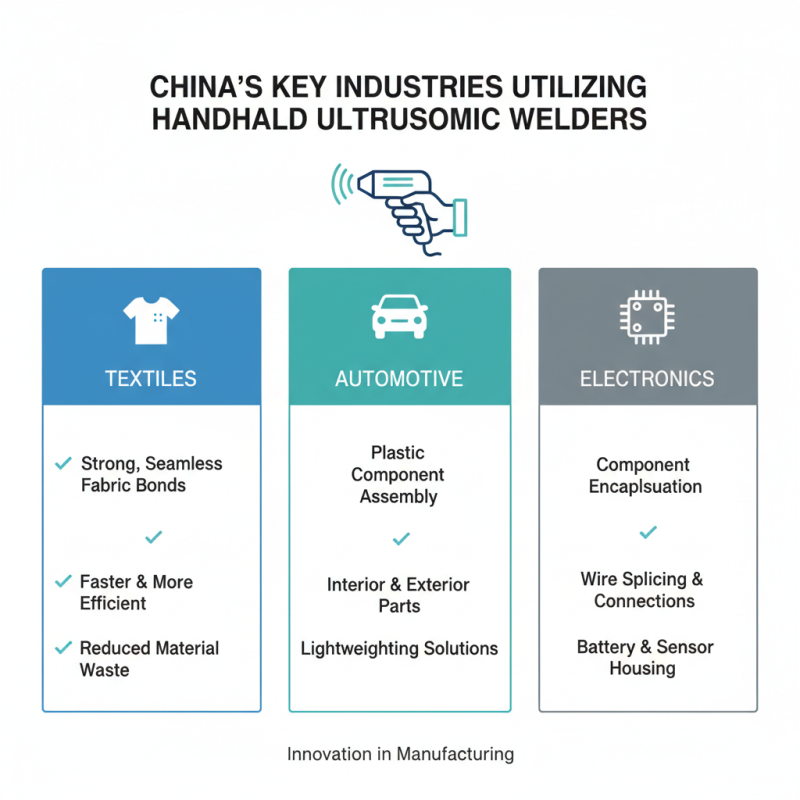
Handheld ultrasonic welders play a crucial role in various industries across China. These devices are primarily employed in sectors like textiles, automotive, and electronics. In the textile industry, ultrasonic welding creates strong seams without damaging fabric. This method is faster and more efficient than traditional sewing techniques. It also reduces waste, as it often requires no additional materials.
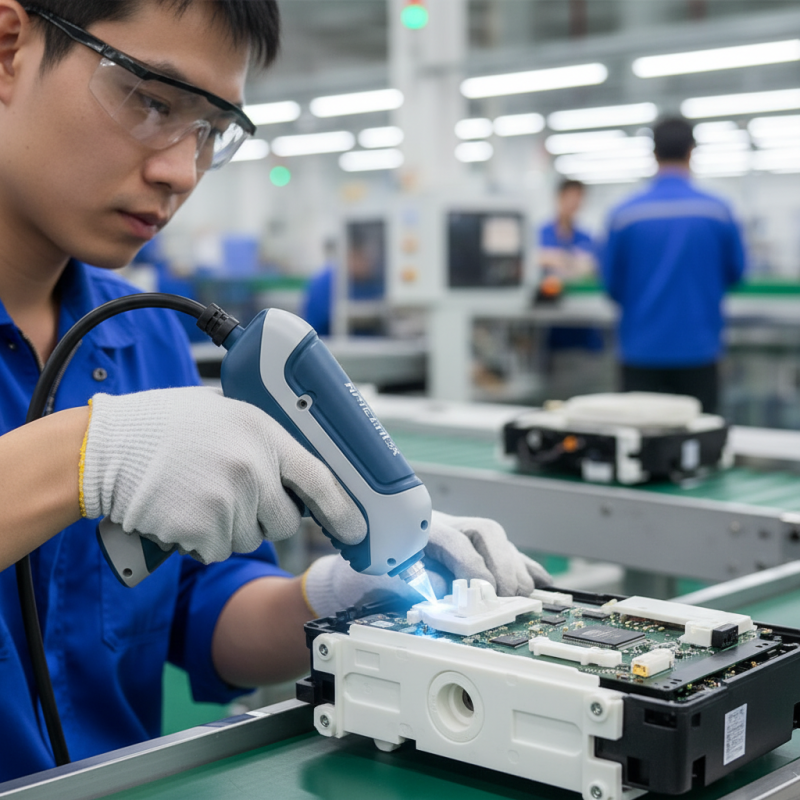
In the automotive sector, handheld ultrasonic welders are used for joining plastic components. This process is beneficial as it minimizes the risk of defects. Many automotive manufacturers rely on this technology to enhance production speed. Similarly, in electronics, ultrasonic welding ensures reliable connections between components. It can achieve high precision with minimal thermal impact, which is essential for delicate parts.
Despite the advantages, some challenges exist. Operators may require extensive training to use these devices effectively. Moreover, the initial investment can be significant for small businesses. Still, the long-term benefits often outweigh these concerns. As industries in China continue to evolve, the demand for handheld ultrasonic welders will likely grow. Adapting to this technology can lead to increased efficiency and product quality in various manufacturing processes.
Comparison of Handheld Ultrasonic Welding with Traditional Methods
Handheld ultrasonic welding is gaining traction as a modern alternative to traditional welding methods in China. Unlike conventional welding, which relies on heat, this method uses high-frequency sound waves to melt materials together. This process minimizes thermal damage and reduces defects in the weld. It is especially effective for thermoplastics and composites, making it suitable for diverse industries.
Traditional methods often require extensive setup and can be time-consuming. In contrast, handheld ultrasonic welders are portable and user-friendly. Operators can work in tighter spaces, enhancing productivity. However, some users may struggle with mastering the technology initially. The learning curve can be steep, and achieving the desired results often requires practice. Still, the advantages—like lower energy consumption and a cleaner environment—often outweigh the challenges.
Furthermore, while the initial investment for handheld ultrasonic equipment can seem high, the long-term savings in labor and material costs are significant. The reliability of the welds produced can lead to better product quality, but inconsistent application can lead to failures. Professionals must stay trained and updated on best practices to ensure the effectiveness of this technology.
Comparison of Handheld Ultrasonic Welding and Traditional Methods
Technological Innovations in Handheld Ultrasonic Welding Equipment
Handheld ultrasonic welding equipment has revolutionized manufacturing in China. This technology uses high-frequency ultrasonic vibrations to join materials. It is particularly effective for welding plastics and composites, providing a strong bond without additional adhesives. Such innovations are reshaping production lines, making them faster and more efficient.
Recent advancements in ergonomic design enhance usability. Workers can operate these tools with minimal fatigue. The lightweight features allow for prolonged use during production. However, some operators may struggle with the learning curve associated with new technologies. This can lead to initial inefficiencies in production. Regular training is essential to maximize the potential of this equipment.
Another significant benefit is the reduction of waste. Traditional welding methods often lead to excess material use. In contrast, ultrasonic welding is precise, minimizing excess. Yet, inconsistent results can occur if the settings are not calibrated properly. Continuous monitoring and adjustment are crucial to maintaining quality in production.
Cost-Efficiency and Productivity Gains from Ultrasonic Welding
Handheld ultrasonic welders offer numerous benefits, particularly in cost efficiency and productivity enhancement.
These devices utilize high-frequency sound waves to create strong, lasting bonds between various materials. They are simple to operate, which reduces the need for extensive training.
This ease of use can lead to a quicker turnaround time in production processes, saving companies both time and resources.
In many manufacturing environments, productivity metrics hinge on the speed of operation. Handheld ultrasonic welding achieves quick cycle times,
which translates to more products being completed within the same timeframe. The precision of ultrasonic welders minimizes material waste, as they require less power
and produce fewer defects compared to traditional welding methods. Though, companies should be aware that achieving optimal results often requires technician experience
and understanding of the equipment.
However, there are challenges to consider. The efficiency gains might not be evident if the operator lacks familiarity with the machine's settings or capabilities.
This highlights the importance of proper training and continual skill development. In a fast-paced manufacturing landscape,
overlooking operator proficiency could negate the expected benefits. Thus, while the technology promises significant improvements,
a thoughtful approach to implementation is essential for achieving desired outcomes.