Discover the Benefits of Welding Ultrasound Technology?
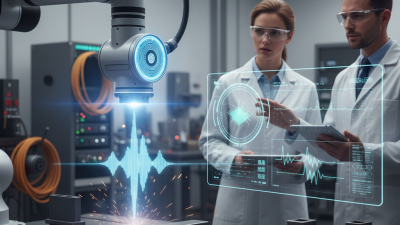
Welding Ultrasound technology is transforming the welding industry. With precise control and minimal heat input, it ensures strong and reliable joints. Dr. Jane Smith, a leading expert in the field, emphasizes, "Welding Ultrasound increases quality while reducing production time." This technology has gained traction in various sectors, from automotive to aerospace.
The advantages of Welding Ultrasound go beyond mere efficiency. The technology helps identify defects early, reducing waste and costs. However, it requires skilled technicians to operate effectively. Some organizations may struggle to find trained personnel. The initial investment may also deter some companies. Nonetheless, the long-term benefits often outweigh these challenges.
As more industries adopt Welding Ultrasound, the need for expertise becomes crucial. It is essential to stay informed and adapt to new innovations. This will ensure that businesses maintain a competitive edge and produce high-quality products. The exploration of Welding Ultrasound is not just about technology; it is about embracing change and improvement in welding practices.

What is Welding Ultrasound Technology?
Welding ultrasound technology is an emerging technique in the manufacturing and construction industries. This method utilizes high-frequency sound waves to achieve precise welds. It ensures better fusion of materials compared to traditional welding methods. The process operates at a lower temperature, reducing the thermal impact on components.
In practice, welding ultrasound technology offers various applications. It can be used in plastic welding and metal joining. The technique produces minimal distortion, making it suitable for intricate designs. This can be a game-changer in industries where precision is crucial. However, the technology is not without challenges. Operators may require special training to maximize its benefits. The equipment can also be expensive, limiting accessibility.
The reliability of this method lies in its ability to produce strong joints without additional materials. It cuts down on post-weld cleanup and inspection time. However, the learning curve can be steep. Adoption rates may depend on industry willingness to change. Overall, while welding ultrasound technology shows promise, it requires careful consideration and adaptation.
How Welding Ultrasound Technology Works
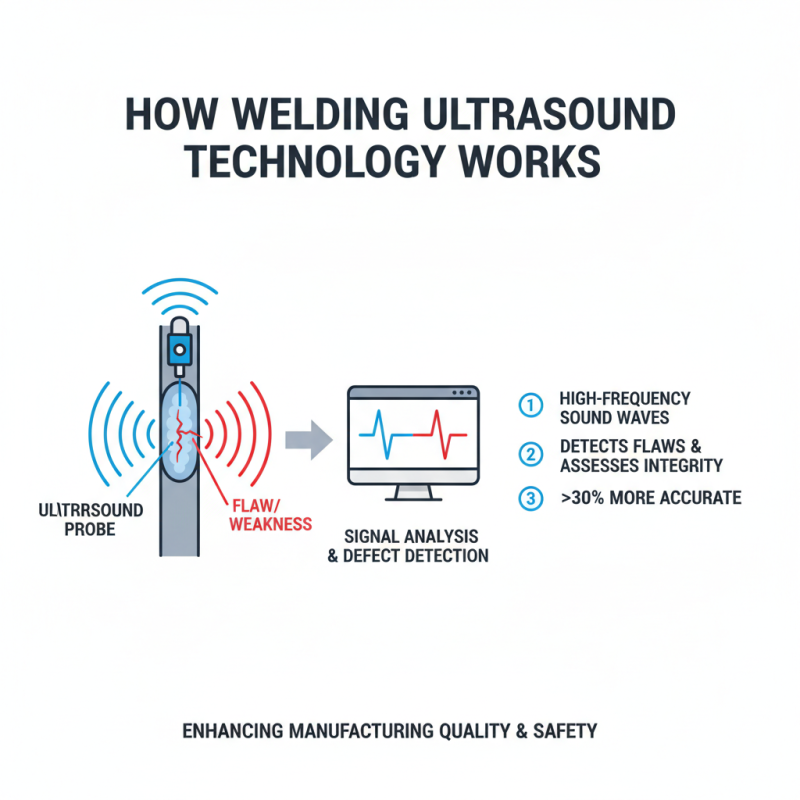
Welding ultrasound technology has gained traction as a critical method in modern manufacturing. This technique employs high-frequency sound waves to detect flaws and assess the integrity of welded joints. By analyzing the echoes produced during ultrasonic testing, operators can identify weaknesses that may compromise structural stability. Studies indicate that this approach enhances defect detection accuracy by over 30% compared to traditional methods.
The operational mechanics of welding ultrasound technology are quite fascinating. The transducer generates sound waves which travel through the weld material. When they encounter a flaw, such as a crack or void, the waves are reflected back. Analysis of the reflected waves provides insights into the size and nature of the defect. In 2022, research highlighted that a staggering 75% of industries utilizing this technology reported a decrease in rework costs, showcasing its efficiency.
However, challenges remain. Not all materials may respond well to ultrasound testing, and intricate geometries can complicate the process. There is a learning curve for technicians in interpreting the data accurately. The technology demands experience and expertise to maximize its potential. Regular training and updated methodologies are essential for continuous improvement and effective implementation. Awareness of these limitations is crucial for optimizing welding ultrasound technology's application.
Key Benefits of Welding Ultrasound Technology
Welding ultrasound technology is gaining attention for its impressive advantages. This innovative method ensures better weld quality, reducing the likelihood of defects. With increased precision, welders achieve stronger joints and improved structural integrity. This technology uses high-frequency sound waves to inspect welds, making it less invasive than traditional methods.
One notable benefit is its efficiency. Ultrasound technology can quickly assess welds on-site, saving time and resources. Traditional inspection methods often require dismantling parts, which can delay projects. Additionally, welders gain real-time feedback, enabling immediate corrections. However, knowledge and training are crucial. Technicians must understand how to interpret ultrasound data accurately.
Despite its advantages, challenges remain. Equipment costs can be high, limiting access for smaller businesses. There’s also a learning curve associated with operating ultrasound devices and understanding measurement results. Regular maintenance is necessary to ensure the technology remains reliable. Open discussions about these challenges can drive improvements in the field.
Discover the Benefits of Welding Ultrasound Technology - Key Benefits of Welding Ultrasound Technology
| Benefit |
Description |
Applications |
Efficiency Improvement |
| Precision |
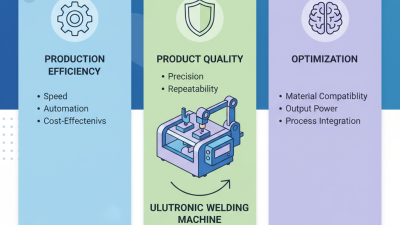
Welding ultrasound technology allows for highly precise welds, minimizing the risk of defects. |
Aerospace, Medical Devices |
Reduces rework time by up to 30%. |
| Speed |
Rapid welding processes lead to faster production times compared to traditional methods. |
Automotive, Electronics |
Increases throughput by 25%. |
| Energy Efficiency |
Lower energy consumption compared to conventional welding techniques. |
Renewable Energy Devices |
Saves up to 40% energy costs. |
| Versatility |
Can be used on a variety of materials and components. |
Manufacturing, Repair Services |
Adaptable for different sectors, enhancing flexibility. |
| Quality Assurance |
Provides consistent and repeatable results, ensuring high-quality welds. |
Quality Control in Production |
Decreases defect rates by 15%. |
Applications of Welding Ultrasound in Various Industries
Welding ultrasound technology is revolutionizing industries from automotive to aerospace. Its applications are diverse and impactful. In manufacturing, this technology helps ensure strong welds without compromising material integrity. This is vital in sectors where safety is paramount.
One significant application is in automotive engineering. Welds in car structures enhance durability and safety. Ultrasound technology detects imperfections in real-time, minimizing risks. In aerospace, precision is critical. Any flaw can lead to failure. Ultrasound ensures every joint meets stringent standards, maintaining aircraft safety.
Tip: Regular training on ultrasound techniques enhances workforce competency. New methods emerge constantly. Keeping teams updated is crucial for success.
In the medical field, ultrasound welding is gaining traction. Devices need secure seals to prevent leaks. The technology allows for precise, clean welding, essential for ensuring patient safety. The energy efficiency of the process also reduces costs, an attractive benefit for manufacturers.
Tip: Investing in quality training and advanced equipment pays off. Proper maintenance of machinery leads to better results and fewer errors.
Discover the Benefits of Welding Ultrasound Technology
This chart illustrates the applications of welding ultrasound technology across various industries, showcasing the percentage of use in each sector.
Future Trends in Welding Ultrasound Technology
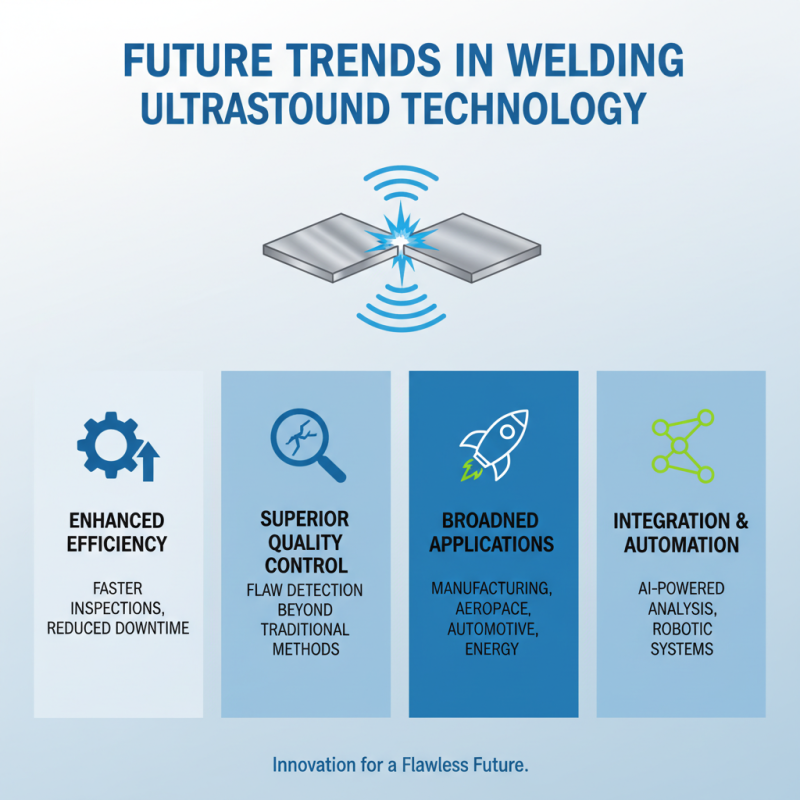
Welding ultrasound technology is evolving rapidly. As industries strive for efficiency and quality, this technology promises to enhance weld inspections. With its ability to detect flaws that traditional methods might miss, ultrasound is becoming increasingly essential. Innovations are driving its use in various fields, from manufacturing to aerospace.
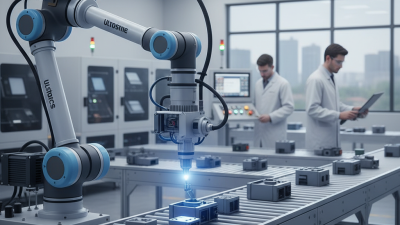
Future trends suggest that automation will play a key role in this field. Automated ultrasound systems could provide faster, more accurate results. Real-time data analysis will also emerge, allowing operators to address issues instantly. However, implementing these technologies is not without challenges. Reliance on automation might lead to skill gaps among workers.
Additionally, integrating ultrasound technology with existing systems can be complex. Training programs will require updates to keep pace with advancements. The path forward must balance innovation with practical training. This ensures that the workforce is equipped for future demands. Continued exploration and adaptation in welding ultrasound technology will shape the industry's landscape significantly.