What is the Best Transducers Ultrasonic Welder for 2026?
In the quest for the best Transducers Ultrasonic Welder for 2026, one must consider various factors. High-quality welders are vital for efficiency. They can significantly impact production rates in industrial settings. Each transducer plays a crucial role in this process. A well-functioning transducer can affect the quality of the weld. It is essential to evaluate the specifications and compatibility of options available.
Not all Transducers Ultrasonic Welders are created equal. Some may promise advanced features but fall short in performance. Real-world testing is necessary to identify reliable models. User reviews can provide insights but may also be biased. It's important to gather a range of opinions for a complete picture.
A focus on durability and maintenance is crucial. Some welders may require constant calibration. This can lead to downtime and increased costs. Choosing the right welder means balancing performance, cost, and ease of use. Ultimately, investing time and effort in research will pay off. A thoughtful selection can lead to better production outcomes.
Overview of Ultrasonic Welding Technology in 2026
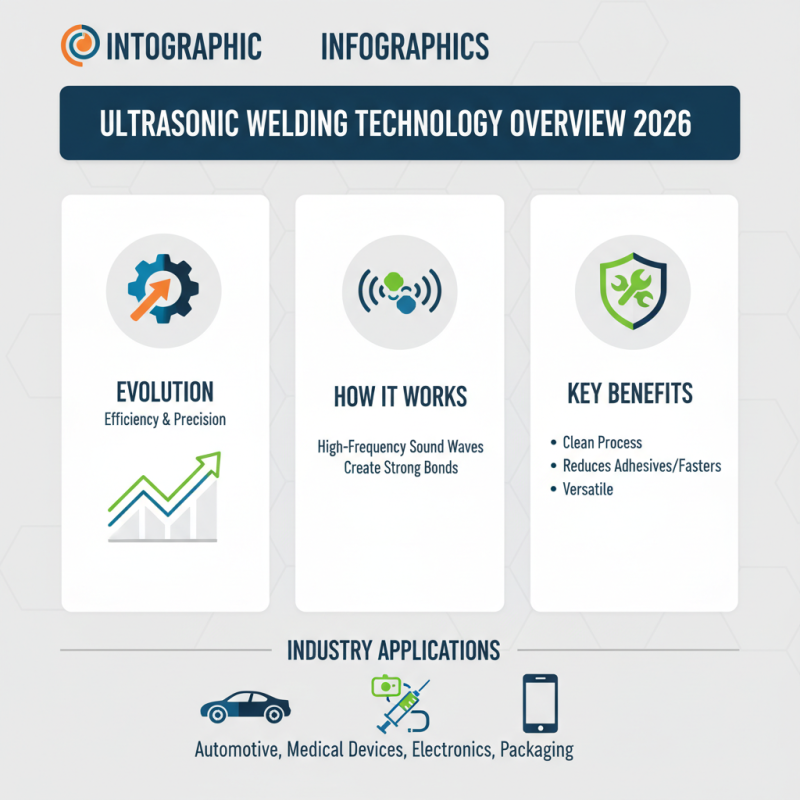
Ultrasonic welding technology is evolving rapidly. In 2026, we see significant advancements in efficiency and precision. This method uses high-frequency sound waves to create strong bonds. It's popular in various industries, from automotive to medical devices. The process is clean, often reducing the need for adhesives or mechanical fasteners.
Today's transducer designs focus on maximizing energy transfer. However, challenges remain in achieving uniform results across different materials. Some materials may not weld effectively. Frequent adjustments are often needed. Additionally, improper setup can lead to inconsistent quality.
Training operators is crucial. Even the best devices require skilled hands. An operator's experience can make a notable difference. Understanding each material's properties can enhance the welding process. Overall, while progress is evident, addressing these complexities is essential for success in ultrasonic welding in 2026.
Key Specifications for Transducers in Ultrasonic Welders
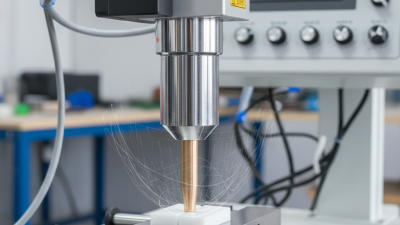
When looking for the best transducers for ultrasonic welders in 2026, consider key specifications that ensure efficiency and durability. Transducers convert electrical energy into ultrasonic vibrations. This process is crucial for achieving strong welds. Look for transducers with high amplitude and frequency ratings. Typically, frequencies range from 20 kHz to 40 kHz.
A tip: check the materials used in transducers. Titanium and aluminum are popular for their durability and lightweight properties. They improve overall performance but may require more care. Regular maintenance is vital for longevity.
Another aspect is power output. Higher wattage means more strength when welding. Ensure the power output matches your specific welding projects. However, be aware that increased power can lead to overheating. Monitor the temperatures regularly to avoid unnecessary damage and to ensure your equipment remains effective.
Top Brands and Models of Ultrasonic Welders in 2026
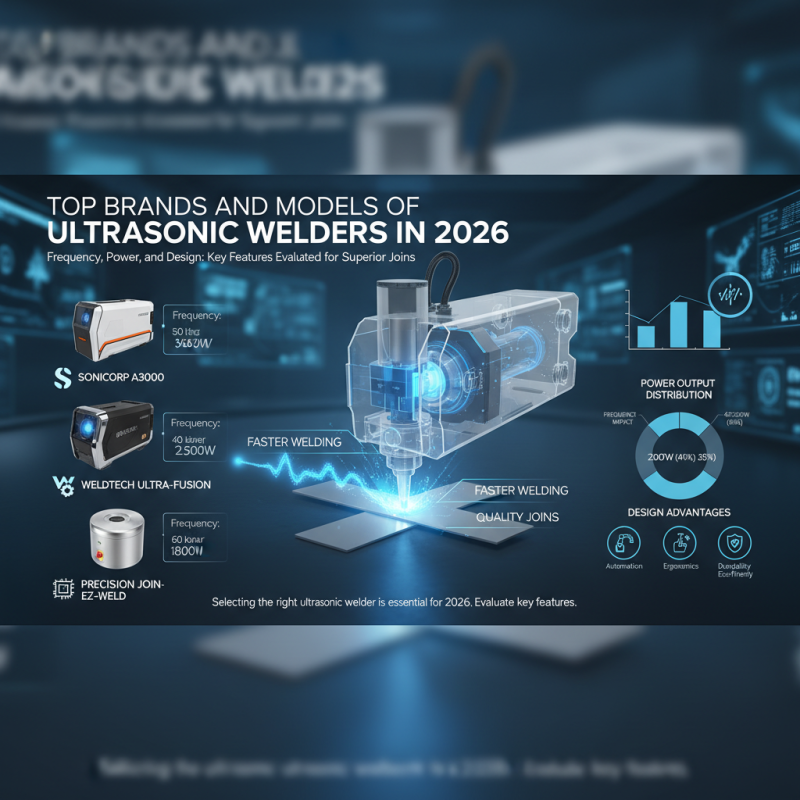
As we look toward 2026, selecting the right ultrasonic welder becomes essential. The market is filled with various brands and models. Each option claims to offer unique advantages. It's important to evaluate key features such as frequency, power output, and design. A welder's frequency impacts the welding speed and join quality. Higher frequencies often yield better results with thinner materials.
One notable trend is the increasing focus on user-friendly designs. Many modern models incorporate digital interfaces. These interfaces simplify setup and operation. However, there can be a learning curve. Not all users adapt easily to new technologies. Feedback suggests that some features may still confuse beginners.
In 2026, energy efficiency will likely be a crucial factor. Some welders consume more power than necessary. This not only raises operational costs but also impacts sustainability efforts. Buyers should consider the long-term costs, not just the initial price. Evaluating ongoing energy consumption is vital for informed decisions. Finding the perfect balance requires thorough research and careful thought.
Comparative Analysis: Frequency and Power Ratings of Leading Transducers
When selecting the best ultrasonic transducer for welding in 2026, frequency and power ratings play crucial roles. Most leading transducers operate within the range of 20 kHz to 40 kHz. This frequency affects the effectiveness of the welding process. Reports indicate that higher frequencies yield finer welds, but they may struggle with thicker materials. Users often report frustrations when the transducer doesn’t match the material's requirements.
The power rating is equally important. Typically, power ratings for ultrasonic transducers range from 500 watts to 3000 watts. Lower power can lead to incomplete welds and extended processing times. Conversely, too much power can damage sensitive materials or create excessive heat. It’s vital to find a balance. According to industry analysis, transducers with 2000 watts at 20 kHz are preferred for robust applications, while lower wattage is better for delicate tasks.
Many professionals face challenges in achieving optimal results. Misalignment of frequency and power ratings can lead to inconsistent weld quality. Users often neglect proper calibration, which increases operational errors. These issues emphasize the need for thorough research before making a choice. The right transducer can drastically improve efficiency and cost-effectiveness, but it requires careful consideration of frequency and power ratings.
Future Trends in Ultrasonic Welding: Innovations and Market Growth
Ultrasonic welding has evolved rapidly, and future innovations promise even greater changes. In 2026, we may see a stronger emphasis on automation and smart technology. Manufacturers are exploring ways to integrate AI into the welding process. This can increase accuracy and reduce human error. Machines equipped with real-time monitoring can optimize performance on the fly. While this advancement is exciting, it raises questions about the need for skilled operators.
Sustainability in ultrasonic welding is also gaining traction. Companies are actively seeking eco-friendly materials and processes. This shift could lead to reduced energy consumption. However, the transition may not be simple. Companies might face challenges in adopting new materials that perform at the same level. In addition, the cost of development and training might inhibit progress for some.
The market for ultrasonic welding is projected to grow significantly. New applications are emerging across various industries. Medical devices, automotive components, and consumer goods are ripe for innovation. As these trends unfold, companies must adapt or risk falling behind. It's not just about staying current; it's about anticipating the needs of tomorrow. Processes must be streamlined without sacrificing quality. Balancing speed and precision will be crucial as the market evolves.