Best Ultrasonic Belt Welder at 139th Canton Fair 2026?
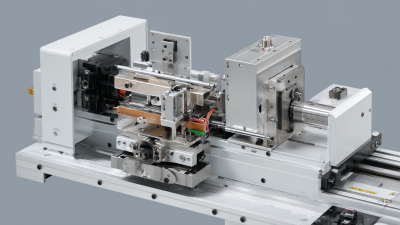
The upcoming 139th Canton Fair in 2026 is set to be an exciting event for manufacturers and buyers alike. One standout product expected to gain attention is the Ultrasonic Belt Welder. This innovative tool is crucial for various applications in advanced manufacturing and textiles.
The fair will run from April 15 to May 5, with a focus on cutting-edge technology and quality home goods. Buyers are eager to explore new solutions, especially in ultrasonic technology. The AI-driven features will help them find the best suppliers efficiently.
While many products will shine, the Ultrasonic Belt Welder could be a game-changer in the industry. However, not all welders meet quality standards. Buyers should be careful when selecting suppliers, despite the navigational aids provided. In a crowded marketplace, it's essential to look for unique innovations. This fair offers a perfect stage for that.
Overview of Ultrasonic Belt Welders
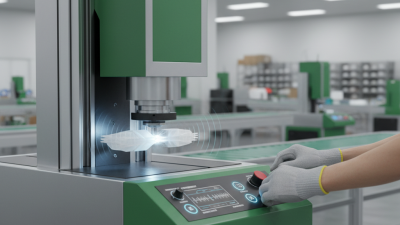
Ultrasonic belt welders are gaining popularity in various industries. These machines use high-frequency vibrations to join materials effectively. The process is quick and energy-efficient, making it ideal for mass production.
At the upcoming 139th Canton Fair in 2026, visitors can expect an array of innovative ultrasonic belt welders. Each model may vary in features and capabilities. It's essential to explore different options to find the best fit for your production needs. Some machines may have limitations, such as size constraints or material compatibility issues.
When evaluating ultrasonic belt welders, consider the specific requirements of your projects. Not all welders perform equally in diverse conditions. User feedback is crucial in understanding how well each model functions. Reflecting on the pros and cons will help in making an informed decision.
Key Features to Look for in Ultrasonic Belt Welders
When exploring ultrasonic belt welders, several key features stand out. Power output is crucial for efficient welding. A higher wattage often means faster and stronger welds. Look for options that allow you to adjust power settings for different materials. Flexibility in power can significantly impact your production quality.
Consider the frequency settings as well. Most ultrasonic welders operate between 20 kHz to 40 kHz. Each frequency handles various materials differently. A machine with adjustable frequency capabilities offers more versatility. It’s essential to choose a welder that best fits the specific materials you'll work with.
Don’t overlook the machine's build quality and ease of use. Sturdy construction ensures durability. An intuitive interface simplifies operation. However, some machines may have steep learning curves. It’s helpful to get feedback from other users. This will guide your choice and improve your welding process.
Comparative Analysis of Ultrasonic Belt Welder Features
Top Brands and Models Displayed at the 139th Canton Fair
At the 139th Canton Fair, ultrasonic belt welders take center stage. This year, manufacturers showcase innovative designs and cutting-edge technology.
Attendees will explore a variety of models, each presenting unique features and capabilities.
From compact units to larger machines, the diversity caters to different industrial needs.
Visitors can expect to see welders that emphasize precision and efficiency. Some models boast user-friendly interfaces, making them ideal for beginners. Others highlight their power and durability, suitable for heavy-duty applications.
However, certain designs may seem overly complex, raising questions about usability.
It’s crucial for buyers to weigh functionality against ease of operation.
The competition is fierce, pushing brands to refine their offerings. Some welders are equipped with advanced features but may come with higher price tags.
It’s essential to assess long-term value rather than initial investment alone.
Attendees should take the time to test multiple options, noting what works and what doesn’t.
This hands-on approach could reveal potential pitfalls in some models, aiding informed decision-making.
Benefits of Using Ultrasonic Technology in Belt Welding
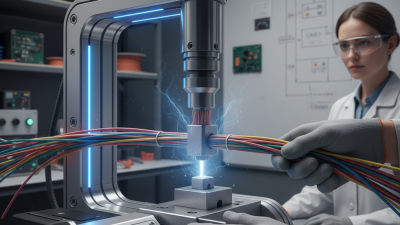
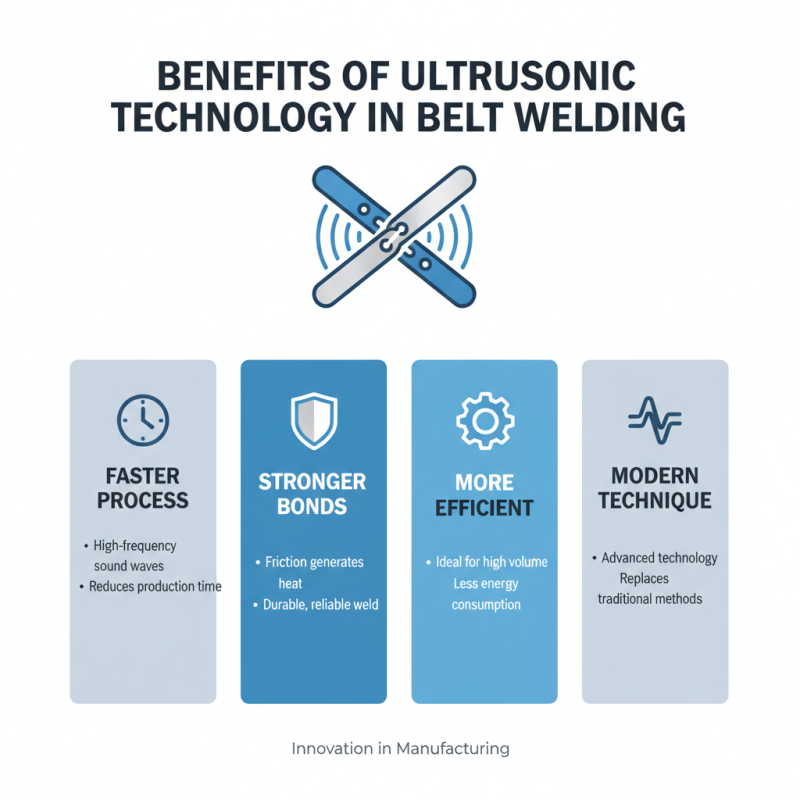
Ultrasonic technology is changing the landscape of belt welding. This method offers significant benefits over traditional welding techniques. It uses high-frequency sound waves to generate heat through friction, resulting in a strong bond. The process is fast and efficient, making it ideal for high-volume production environments.
One major advantage of ultrasonic belt welding is precision. The technology allows for exact control over the welding process, reducing the risk of errors. This can lead to less material waste and lower costs. The clean nature of ultrasonic welding means less mess, which is also appealing for industries focused on sustainability.
However, some challenges exist. The initial setup costs can be high. And not all materials are suitable for ultrasonic welding. Companies might need to experiment to find the right combinations. Despite these hurdles, the benefits of using ultrasonic technology generally outweigh them. Its efficiency and precision make it an attractive option for manufacturers at events like the Canton Fair. This innovation is shaping the future of production in many sectors.
Future Trends in Ultrasonic Welding Technology
Ultrasonic welding technology is evolving rapidly. As industries strive for efficiency, this method emerges as a leader in bonding materials. Recent industry reports indicate a 15% annual growth in ultrasonic welding applications. This trend suggests a shift towards more sustainable production methods. Manufacturers are integrating this technology to reduce energy consumption and waste.
The 139th Canton Fair in 2026 promises to showcase the latest in ultrasonic belt welding. It highlights innovations that improve speed and precision. New machines are now capable of joining more complex materials, making them integral to automotive and medical sectors. Experts note that the adaptability of ultrasonic technology allows for greater design flexibility. However, some product development teams are still struggling to optimize these machines for specific applications.
Moreover, the increasing demand for automation is changing the landscape. A recent survey highlighted that nearly 30% of companies are investing in ultrasonic technology to meet production targets. This growth presents challenges in workforce training and machine maintenance. While the future looks bright, organizations must address these gaps to fully leverage the benefits of ultrasonic welding.
Best Ultrasonic Belt Welder at 139th Canton Fair 2026? - Future Trends in Ultrasonic Welding Technology
| Model |
Frequency (kHz) |
Power (W) |
Welding Speed (m/min) |
Material Compatibility |
Weight (kg) |
Price Range (USD) |
| Model A |
20 |
2000 |
5.0 |
Plastic, Fabric |
15 |
1500 - 2000 |
| Model B |
30 |
2500 |
6.5 |
Leather, Thermoplastics |
18 |
2000 - 2500 |
| Model C |
40 |
3000 |
7.0 |
PVC, PET |
20 |
2500 - 3000 |
| Model D |
25 |
1500 |
4.5 |
Composite Materials |
14 |
1200 - 1700 |