Why You Should Choose an Ultrasonic Spot Welder for Your Manufacturing Needs
In the ever-evolving landscape of manufacturing technology, the choice of equipment plays a crucial role in determining the efficiency, quality, and overall success of production processes. Among the myriad of welding solutions available, the Ultrasonic Spot Welder stands out as a transformative tool for various industries, including textiles, plastics, and electronics. This advanced welding technology utilizes high-frequency ultrasonic vibrations to create precise and strong bonds between materials without the need for additional heat or adhesives, making it an optimal choice for modern manufacturing needs.
As manufacturers continuously seek ways to enhance productivity and reduce costs, the Ultrasonic Spot Welder offers a compelling solution that promises to streamline operations and deliver superior results.
This article will explore the top ten reasons why investing in an Ultrasonic Spot Welder can significantly benefit your manufacturing processes. From its ability to improve workflow efficiency to its environmental advantages, understanding the unique features and benefits of this innovative welding method can empower businesses to make informed decisions that align with their goals.
Benefits of Ultrasonic Spot Welding in Modern Manufacturing
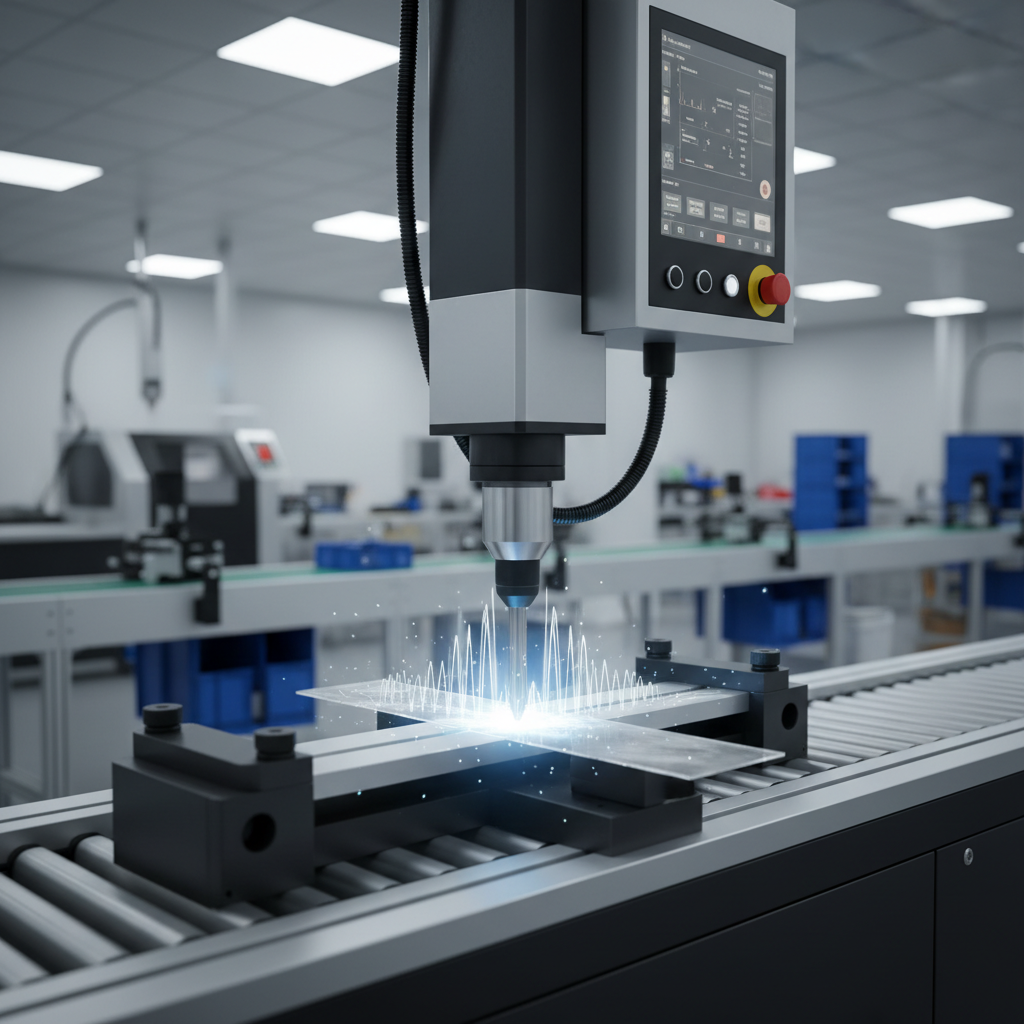
Ultrasonic spot welding has emerged as a pivotal technique in modern manufacturing, particularly due to its numerous benefits for various applications. This method is renowned for its speed and energy efficiency, making it ideal for joining thermoplastic composites. As industries strive for more sustainable practices, ultrasonic welding stands out as it requires less power compared to traditional welding methods, effectively reducing operational costs while enhancing productivity.
Recent advancements in ultrasonic welding technology, such as the integration of advanced servo drives and immediate performance feedback, have further solidified its status as a preferred choice for manufacturers. These innovations not only ensure precision in welding but also contribute to the production of ultra-low-cost flexible circuits, which are increasingly valuable in electronics and automotive sectors. By employing ultrasonic spot welding, manufacturers can take advantage of a streamlined process that supports the creation of complex designs, such as multi-layer circuits and innovative fuselage designs in aerospace, thereby positioning them at the forefront of technological advancements in manufacturing.
Key Features of the Top 5 Ultrasonic Spot Welders for 2025
When considering manufacturing needs, ultrasonic spot welders stand out due to their efficiency and precision. In 2025, the leading ultrasonic spot welders are expected to showcase key features that enhance their functionality and adaptability in various industrial applications. These include advanced frequency control for improved weld quality, integrated safety mechanisms to protect operators, and user-friendly interfaces that simplify the setup and operation processes. The incorporation of smart technologies for monitoring and diagnostics can also contribute to reduced downtime and maintenance costs.
As the global ultrasonic welding systems market is projected to reach USD 1,156 million by 2034, with a steady growth rate of 5.1% CAGR, investing in the right equipment becomes crucial for manufacturers aiming to stay competitive. The top ultrasonic spot welders for 2025 will not only align with this market trend but also offer robust performance metrics, making them ideal for high-volume production environments. Features such as energy efficiency and compatibility with various materials are likely to be significant selling points for these machines, ensuring they meet the evolving needs of manufacturers.
Ultrasonic Spot Welder Features Comparison for 2025
Comparative Analysis: Ultrasonic Spot Welders vs. Traditional Methods
The comparative analysis between ultrasonic spot welders and traditional welding methods reveals significant advantages for modern manufacturing needs. Ultrasonic spot welding utilizes high-frequency sound waves to create welds, achieving superior precision and speed when compared to conventional methods. This technology caters to delicate materials, ensuring minimal thermal distortion and enhancing the overall integrity of the welded components. As industries evolve, the demand for quality and eco-friendly processes amplifies, highlighting ultrasonic welding as a favorable choice.
Additionally, trends in the global ultrasonic welding systems market indicate a projected growth value of USD 1,156 million by 2034, with a compound annual growth rate (CAGR) of 5.1%. This surge underscores an increased acceptance of ultrasonic technology across various sectors, from automotive to electronics. The ability to predict welding quality through advancements like digital twin technology further strengthens the case for ultrasonic welders, as manufacturers seek to optimize their processes and achieve consistent results. By embracing innovative welding solutions, companies can significantly enhance their production efficiency and product quality, positioning themselves ahead in a competitive landscape.
Why You Should Choose an Ultrasonic Spot Welder for Your Manufacturing Needs
| Criteria |
Ultrasonic Spot Welder |
Traditional Spot Welder |
| Welding Speed |
High (typically seconds) |
Moderate (typically minutes) |
| Heat Generation |
Minimal |
High |
| Material Compatibility |
Wide range (plastics, metals) |
Primarily metals |
| Power Consumption |
Lower |
Higher |
| Setup Time |
Short |
Long |
| Cost Efficiency |
High in mass production |
Higher operational costs |
| Environmental Impact |
Lower due to minimal heat |
Higher due to welding fumes |
Industry Applications: Where Ultrasonic Spot Welding Excels
Ultrasonic spot welding has become a vital technology across various industries due to its unparalleled efficiency and precision. In the automotive sector, for instance, ultrasonic spot welders are used to join thin materials such as plastics and metals, which are increasingly prevalent in modern vehicle design. According to a report by MarketsandMarkets, the global ultrasonic welding equipment market is projected to reach $2.5 billion by 2025, driven largely by its applications in automotive manufacturing. This technology facilitates faster production cycles and reduces the need for extensive post-weld processing, making it a preferred choice among manufacturers.
In the electronics industry, ultrasonic spot welding excels in applications like the assembly of circuit boards and packaging. The process ensures high-quality welds without damaging sensitive components, which is crucial given the intricate designs of modern electronics. A study published in the Journal of Manufacturing Science and Engineering indicates that ultrasonic welding can improve production efficiency by up to 35%, significantly lowering the cost per unit produced. As industries lean towards automation and precision, ultrasonic spot welding stands out as an essential tool in optimizing manufacturing processes.
Future Trends in Ultrasonic Spot Welding Technology for Manufacturers
The ultrasonic welding technology market is witnessing significant growth, projected to reach USD 1,156 million by 2034, with a CAGR of 5.1% according to a report by Custom Market Insights. This growth trajectory highlights the increasing adoption of ultrasonic technology across various manufacturing sectors, particularly within nonwovens and composite materials. The demand for efficient and eco-friendly welding solutions is driving innovation, as manufacturers seek methods that enhance production speed and quality.
Recent advancements, such as the integration of artificial intelligence for quality control in ultrasonic spot welding, suggest a shift towards smarter manufacturing processes. By analyzing data generated from these technologies, companies can optimize their workflows and improve product consistency. Moreover, the advent of continuous ultrasonic welding techniques offers crucial flexibility for future applications, including aerospace and deep-space manufacturing. As industries evolve, ultrasonic spot welding will continue to be a vital technology, paving the way for advancements that cater to both current and emerging market demands.