Top 10 Ultrasonic Belt Welder Benefits for Global Buyers?
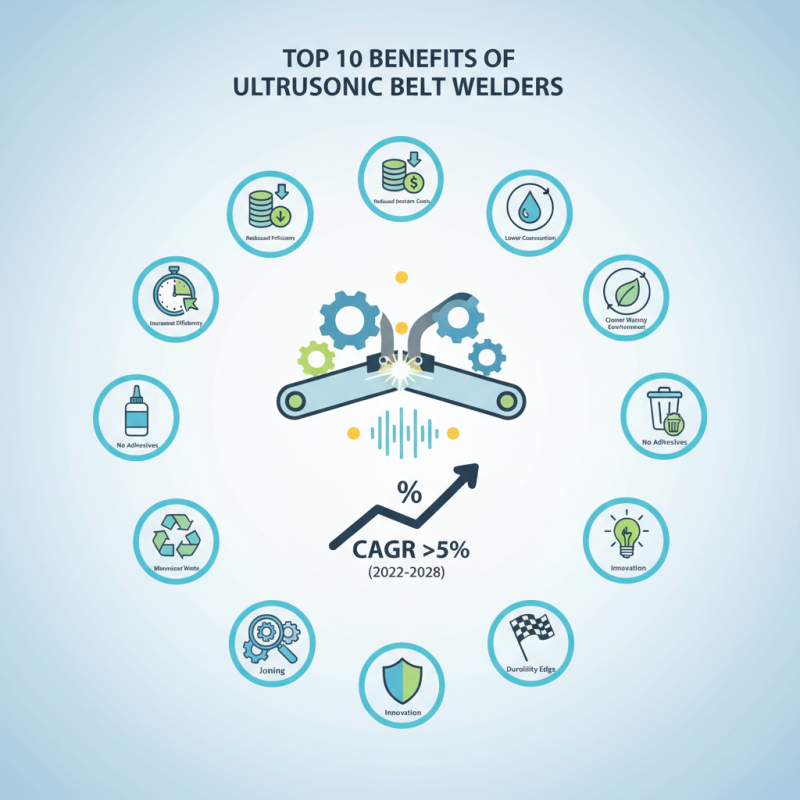
The Ultrasonic Belt Welder has become a pivotal tool in various manufacturing sectors. As reported by industry experts, the market for ultrasonic welding technology is expected to grow steadily, with a CAGR of over 5% from 2022 to 2028. This growth underscores the increasing reliance on ultrasonic methods for precision joining processes.
Global buyers are particularly drawn to the Ultrasonic Belt Welder due to its ability to increase efficiency and reduce production costs. With lower energy consumption than traditional welding techniques, companies can achieve substantial savings. Additionally, this technology boasts a cleaner working environment, eliminating the need for adhesives and minimizing waste.
Despite its advantages, some challenges remain. Adoption requires a thorough understanding of the technology and investment in quality equipment. As manufacturers navigate these complexities, the benefits of the Ultrasonic Belt Welder can be significant, offering innovation and competitive edge in a crowded marketplace. This article will explore the top 10 benefits that make Ultrasonic Belt Welders essential investments for global buyers.
Key Advantages of Ultrasonic Belt Welders for Industrial Applications
Ultrasonic belt welders offer significant advantages for industrial applications. These machines use high-frequency sound waves to create strong and reliable bonds. This technology can improve production efficiency, reduce labor costs, and enhance product quality. According to a recent report by Smithers Pira, ultrasonic welding can increase productivity by up to 30% compared to traditional methods.
A key benefit is the minimization of material waste. The precision of ultrasonic welds leads to fewer defects, driving down material costs. Additionally, ultrasonic welding operates without the need for adhesives. This reduces environmental impact, as no harmful chemicals are involved. Manufacturers have reported a 25% faster production cycle due to these efficiencies.
Tips: When investing in ultrasonic belt welders, assess your production needs carefully. Analyze the types of materials you will work with. Different configurations may suit different applications. Regular maintenance is crucial for consistent performance. This ensures high-quality bonds and prolongs machine life. Understanding these factors can lead to better purchasing decisions and ultimately, higher returns on investment.
Enhanced Efficiency in Manufacturing Processes with Ultrasonic Technology
In modern manufacturing, ultrasonic technology transforms processes. This method uses high-frequency sound waves to create strong welds in materials like plastics and textiles. With reduced cycle times and energy usage, manufacturers benefit significantly. According to recent industry reports, ultrasonic welding can improve efficiency by up to 30%. Companies that adopt this technology often see a quick return on their investment.
Consider incorporating ultrasonic welders into your production line. The quick bonding process minimizes material waste, saving costs. Ultrasonic technology also allows for precise control, which enhances the quality of the final product. However, be mindful of initial setup and training for your operators. A well-trained team can maximize the technology's benefits.
Investing in ultrasonic welding can yield substantial long-term benefits. Be aware of maintenance requirements, as regular checks are crucial for optimal performance. Aim for a schedule that keeps machines in peak condition. By focusing on efficiency and quality, manufacturers can elevate their competitiveness in the market.
Top 10 Ultrasonic Belt Welder Benefits for Global Buyers
| Benefit |
Description |
Impact on Manufacturing |
| Enhanced Speed |
Ultrasonic welding allows for rapid joining of materials without the need for adhesives. |
Increases overall production throughput. |
| Cost Efficiency |
Reduces material waste and lowers production costs. |
Improves profit margins for manufacturers. |
| Strong Bonding |
Creates robust, durable bonds between materials. |
Enhances product reliability and customer satisfaction. |
| Versatile Application |
Suitable for a wide range of materials including plastics and textiles. |
Broadens manufacturing possibilities. |
| Minimal Thermal Impact |
Processes materials without excessive heat, reducing the risk of damage. |
Maintains the integrity of heat-sensitive materials. |
| Ease of Automation |
Easily integrated into automated production lines. |
Supports high-volume manufacturing processes. |
| Reduced Labor Costs |
Requires less manual handling of materials during the welding process. |
Yields significant savings in labor expenses. |
| Consistent Quality |
Delivers uniform and high-quality welds. |
Enhances overall product quality control. |
| Compliance with Standards |
Meets various industrial standards for safety and quality. |
Facilitates market acceptance and certification. |
| Environmentally Friendly |
Minimizes the use of chemicals and contributes to sustainability. |
Aligns with eco-friendly manufacturing practices. |
Cost-Effectiveness: Saving Resources and Time with Ultrasonic Welding
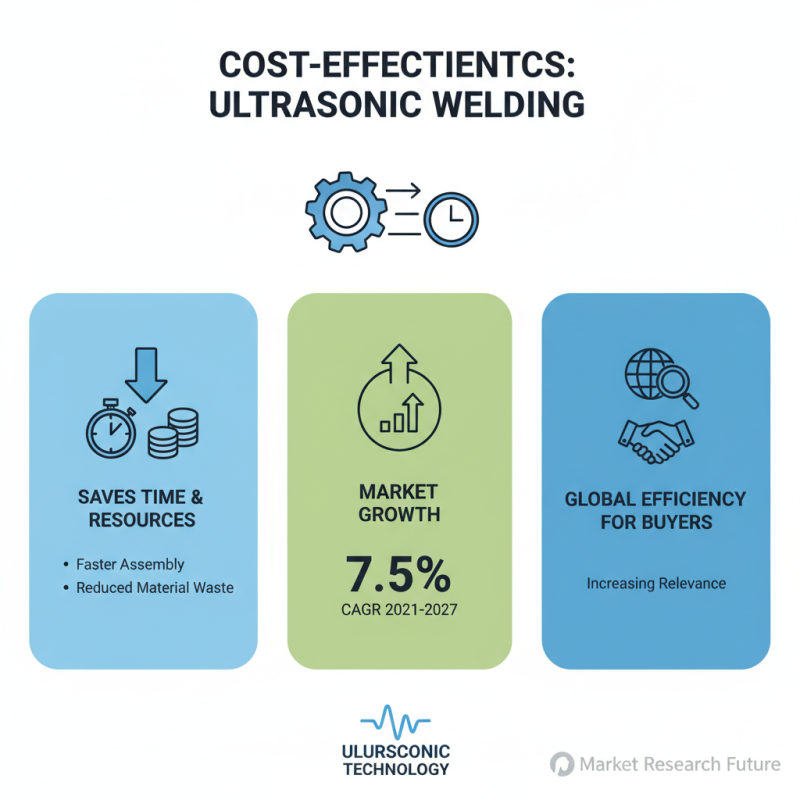
Ultrasonic welding has emerged as a crucial technology in various industries. It offers significant cost-effectiveness by minimizing the time and resources needed for assembly processes. According to a report from Market Research Future, ultrasonic welding is expected to grow at a CAGR of 7.5% from 2021 to 2027. This growth indicates its increasing relevance for global buyers seeking efficiency.
The advantages of ultrasonic welding include reduced material waste and lower energy consumption. Traditional welding methods can consume excessive power, but ultrasonic systems utilize minimal energy. This efficiency not only cuts costs but also supports environmental sustainability efforts. Short welding cycles, often measured in seconds, enable manufacturers to boost production rates significantly.
**Tip:** Consider investing in ultrasonic technology to streamline operations. Evaluate system costs versus potential savings over time.
However, the initial investment in ultrasonic welders can be daunting for small businesses. Furthermore, the learning curve for operators may pose a challenge. Training staff is essential to harness all capabilities. Understanding material compatibility and machine settings can help mitigate issues and ensure effective welds.
**Tip:** Start with a pilot project to assess feasibility. Analyze performance metrics to make data-driven decisions.
Versatility of Ultrasonic Belt Welders Across Different Materials
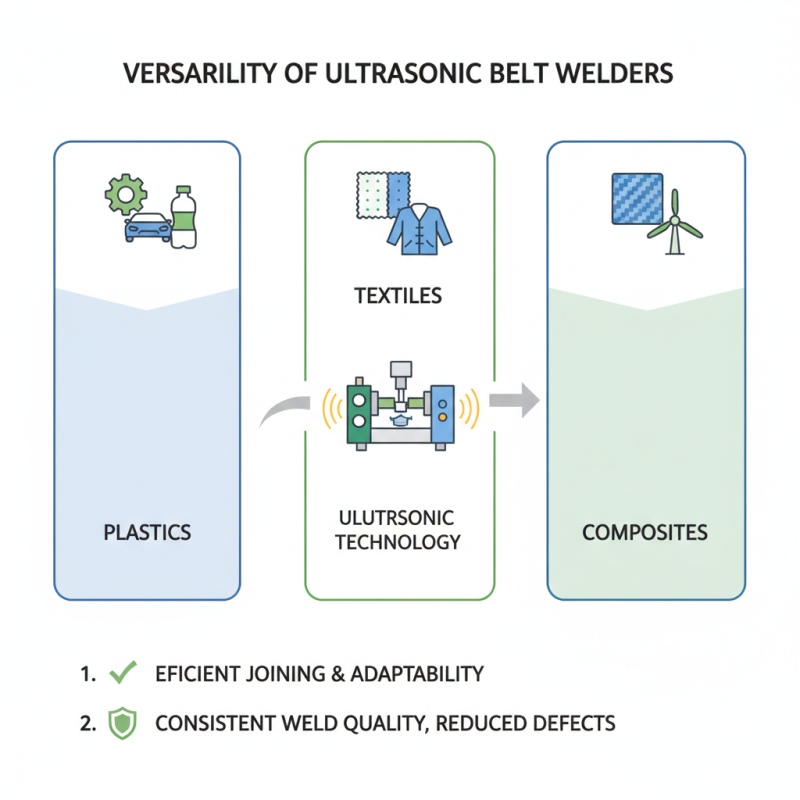
Ultrasonic belt welders showcase remarkable versatility, making them desirable tools for various industries. These machines can effectively join different materials, including plastics, textiles, and composites. Manufacturers appreciate this adaptability for production efficiency. By using ultrasonic technology, they achieve consistent weld quality across diverse applications. This reduces the risk of defects compared to traditional welding methods.
Different materials bring unique challenges. For instance, thin films may require precise energy settings. An optimal approach is crucial to avoid overheating or under-welding. Users must actively monitor these parameters to ensure successful outcomes. The technology is not universally flawless; some materials may resist proper embedding. Understanding material properties aids in achieving ideal results.
Moreover, ultrasonic welders can handle complex shapes and sizes, expanding their usability. However, improper settings can lead to weak joints, prompting ongoing learning. Continuous assessment of techniques improves outcomes for buyers. A commitment to quality through practice and knowledge is essential in maximizing the benefits of ultrasonic welding across materials.
Improved Product Quality Through Precision and Consistency in Welding
Ultrasonic belt welders have transformed many manufacturing processes. Their precision ensures that welds are consistent and strong. This technology minimizes the risk of defects and improves overall product quality. By employing ultrasonic vibrations, the welders can bond materials at the molecular level. This results in tight, durable seams that withstand various stresses and strains.
A common issue in traditional welding methods is heat distortion. Ultrasonic welding reduces this risk because it operates at lower temperatures. Manufacturers can maintain the integrity of heat-sensitive materials. However, the technology requires proper calibration. Incorrect settings can lead to inadequate welds and increased rejection rates.
In addition, the automation in ultrasonic welding minimizes human error. Yet, operators must still be trained to monitor the process effectively. Continuous improvement and employee feedback are vital. As manufacturers adopt this technology, they must remain vigilant. Regular maintenance and updates are essential to ensure consistent output quality.
Top 10 Ultrasonic Belt Welder Benefits for Global Buyers