Leave Your Message

Top Ultrasonic Fabric Welders for Global Buyers

Global buyers are rethinking how technical fabrics are joined. An Ultrasonic Fabric Welder uses high-frequency vibration to create clean, consistent seams without thread, solvents, or extended heating. This matters for medical gowns, automotive interiors, filtration media, protective clothing, and laminated textiles.

MarketsandMarkets reports that the broader ultrasonic welding market could grow from approximately USD 1.8 billion in 2023 to USD 2.7 billion by 2028. Grand View Research also identifies automation, lightweight materials, and faster production as major market drivers. These figures cover more than fabric equipment. Still, they show the commercial direction clearly. Demand is moving toward repeatable, low-waste joining systems.

Dr. Avraham Benatar, a recognized welding researcher, explains, “Ultrasonic welding joins materials through localized frictional heat, without melting the entire assembly.” That principle sounds simple. The buying decision is not. Fabric weight, coating type, seam geometry, horn design, pressure, and welding speed can change results dramatically. In practical trials, a seam may look smooth but fail after washing, flexing, or repeated tension. That weakness is often missed.

This guide compares leading Ultrasonic Fabric Welder options for international buyers. It considers output stability, tooling flexibility, operator safety, energy use, service access, and documented test performance. Certifications and supplier claims still require verification. No machine fits every textile line. A careful buyer should test the actual fabric before approving a purchase. That step can feel slow. It usually prevents expensive surprises.

Top Ultrasonic Fabric Welders for Global Buyers

What Ultrasonic Fabric Welders Are and How They Work

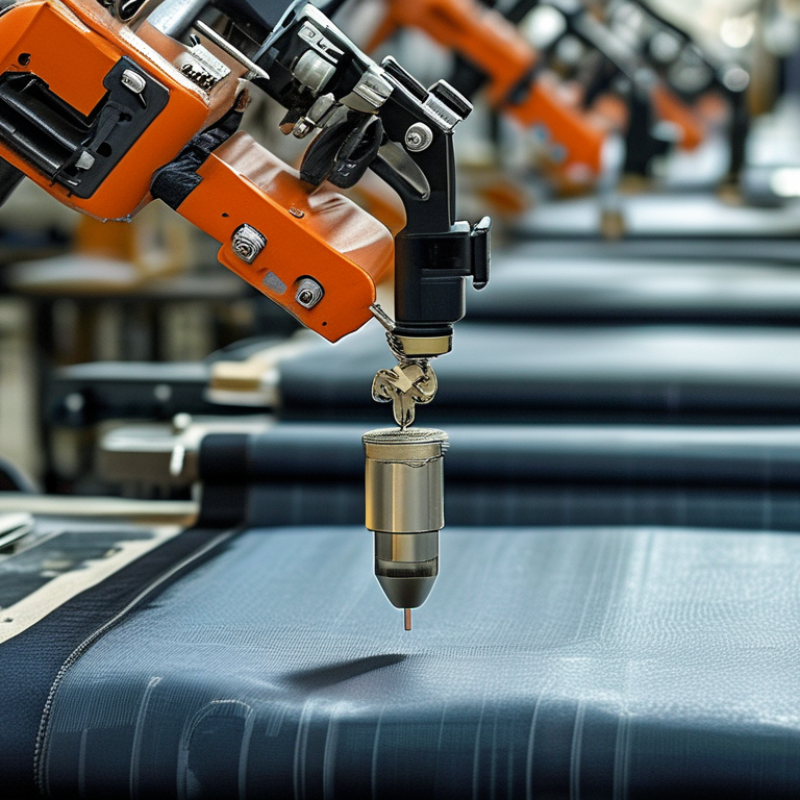
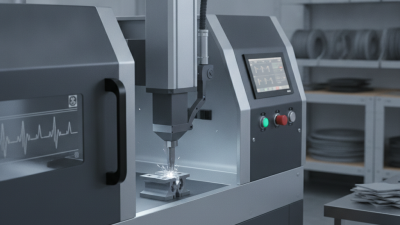
An ultrasonic fabric welder joins thermoplastic fibers without thread, glue, or open flame. It uses high-frequency mechanical vibration, commonly between 20 and 40 kilohertz. A generator creates electrical energy. A piezoelectric transducer converts it into vibration. The booster amplifies movement, while the horn presses against layered fabric. Friction forms heat at the contact line. The polymer softens, flows, and bonds under pressure. The cycle often lasts less than one second.

The process suits polyester, polypropylene, nylon, and many nonwoven materials. Natural fibers alone usually cannot form a stable ultrasonic bond. Coated fabrics can behave differently. Moisture, coating thickness, fabric tension, and horn design all affect seam quality. A practical operator checks peel strength, edge appearance, and leakage after production. Small changes matter. A seam may look clean but fail after repeated bending.

Grand View Research valued the global ultrasonic welding market at roughly USD 1.6 billion in 2023. Its report also forecasts strong growth through 2030. Smithers’ nonwovens industry analysis identifies hygiene, filtration, and medical materials as expanding application areas. These figures support wider equipment demand, but market growth does not guarantee every machine suits every fabric. Buyers should request trials using their actual material stack. Testing only one sample is weak evidence. Process validation should follow documented parameters, consistent pressure, and repeatable strength testing.

Top Ultrasonic Fabric Welders for Global Buyers

What Ultrasonic Fabric Welders Are and How They Work

Ultrasonic fabric welders convert electrical energy into high-frequency mechanical vibration. A horn applies this vibration and pressure to thermoplastic fabrics, causing localized frictional heating and forming a clean bond without thread, adhesive, or added water.

The chart compares common operating frequencies with their approximate wavelength in air at 20°C. Lower frequencies generally support heavier materials, while higher frequencies are commonly selected for finer fabrics and more precise welds. Actual performance depends on fabric composition, thickness, horn design, pressure, and welding speed.

Key Features and Specifications for Comparing Fabric Welders

Top Ultrasonic Fabric Welders for Global Buyers

Key Features and Specifications for Comparing Fabric Welders

Choosing an ultrasonic fabric welder starts with the material, not the machine’s advertised power. Test polyester, nylon, coated textiles, and multilayer laminates before approving production use. Frequency commonly ranges from 20 to 40 kHz. Lower frequencies can deliver stronger penetration, while higher frequencies may suit delicate fabrics. The correct choice depends on fiber density, thickness, and coating behavior.

Check rated power, welding width, horn design, and operating speed together. A wider horn can create broader seams, but it may require greater pressure and cooling control. Pneumatic systems should offer stable pressure adjustment and clear force readings. Servo-driven models often provide better repeatability during long production runs. Digital controls should record amplitude, pressure, time, and energy settings. Useful data reduces guesswork.

Consistency matters most.

Inspect the machine’s maximum fabric thickness and compatible seam patterns. Ask whether replacement horns, converters, and spare parts are readily available in your region. Electrical input, plug standards, guarding, emergency stops, and operator training also deserve careful review. Safety documentation should be clear and current. In practical testing, a higher wattage is not automatically better; excess energy can mark fabric edges or weaken coated layers. I have found that short trials reveal problems brochures rarely mention. Even small alignment errors can produce uneven seams. Buyers should question impressive speed claims when maintenance access is poor. A machine that is difficult to tune may waste more material than it saves.

Top Ultrasonic Fabric Welder Types and Their Industrial Uses

Ultrasonic fabric welders now serve more than simple seam joining. INDA’s 2024 Global Nonwoven Markets report places worldwide nonwoven production near 140 billion square metres in 2023. That scale supports demand for clean, fast bonding equipment.

Rotary ultrasonic welders suit continuous production lines. They join filter media, medical gowns, hygiene products, and laminated fabrics while reducing thread use.

Plunge welders work better for precise, repeated spots. Operators use them for pouch edges, straps, and shaped technical textiles.

Handheld units offer flexibility on large panels, repair work, and low-volume production. However, inconsistent pressure can create weak seams. That problem is easy to underestimate.

Smithers’ 2024 nonwovens outlook expects global demand to approach 150 billion square metres annually by 2028. This growth favors automated welders with digital amplitude control, programmable pressure, and real-time quality checks.

Tips: Test horn frequency, fabric layers, line speed, and weld pressure together. A strong seam is not always the best seam. Excessive energy can mark films or stiffen soft fabrics.

Keep sample records, inspect cross-sections, and repeat tests after changing suppliers. In practice, the perfect setting rarely exists. Production teams must validate durability, appearance, and operator safety before scaling.

How Global Buyers Can Evaluate Manufacturers and Suppliers

Global buyers should evaluate ultrasonic fabric welder suppliers through evidence, not attractive catalogs. Textile Exchange’s Materials Market Report 2024 recorded 124 million tonnes of global fiber production in 2023. Polyester represented about 57%. This matters because welding results change with fiber type, coating, density, and fabric tension. Ask suppliers to weld your actual materials, including layered seams and elastic fabrics. Request samples, cycle times, horn specifications, and visible seam photographs.

Test the machine under repeatable conditions. Record frequency, pressure, amplitude, welding time, cooling time, and seam strength. A capable manufacturer should provide traceable test records, calibration details, operator training, and maintenance intervals. ISO 9001 certification can support process control, but it does not prove welding performance. Review independent test reports carefully. Some reports measure only appearance, not peel strength or wash durability.

Supplier reliability also depends on service after delivery. Check spare-part availability, remote diagnostics, installation support, electrical compatibility, and response times across your region. Request references from factories using similar fabrics. I would not trust a supplier promising universal compatibility. Real production is less tidy. Fabric edges shift, dust collects, and operators improvise. A useful comparison includes total ownership cost, not only the machine price. The International Trade Centre’s trade data also shows how widely textile production crosses borders, making documentation, export experience, and local technical support practical selection factors.

Top Ultrasonic Fabric Welders for Global Buyers - How Global Buyers Can Evaluate Manufacturers and Suppliers
A practical benchmark table for comparing ultrasonic fabric-welding equipment, technical specifications, supplier capability, compliance, and total cost of ownership. Values shown as typical industry ranges and buyer checkpoints rather than brand-specific claims.
Evaluation Category Key Dimension Typical Market Benchmark Why It Matters to Global Buyers Recommended Supplier Evidence
Ultrasonic System Operating frequency 15, 20, 30, 35, or 40 kHz Lower frequencies generally support higher force and heavier materials, while higher frequencies can suit finer fabrics and smaller weld areas. Request the generator frequency, transducer specifications, horn frequency test report, and a material-specific sample weld.
Ultrasonic System Generator power Approximately 500–4,000 W, depending on application Power must match fabric thickness, laminate structure, weld width, production speed, and duty cycle. Excess capacity can increase cost without improving quality. Ask for rated output power, maximum continuous-duty rating, overload protection details, and test results at the intended production rate.
Ultrasonic System Amplitude adjustment Electronic amplitude control, commonly covering a broad adjustable range Fine amplitude control helps prevent material scorching, perforation, weak bonding, and inconsistent seams across different nonwoven or synthetic fabrics. Verify adjustment resolution, amplitude stability, calibration method, and the supplier’s recommended settings for the target material.
Welding Performance Typical weld width Approximately 5–20 mm for common fabric applications Weld width affects seam strength, appearance, material consumption, and compatibility with masks, medical products, filtration media, and technical textiles. Request finished samples measured at several points, cross-section photographs, and seam-strength data using the buyer’s actual fabric.
Welding Performance Typical cycle time About 0.1–2.0 seconds per weld, application dependent Cycle time influences line throughput and labor cost. Actual performance depends on fabric construction, horn size, pressure, cooling, and motion system. Require a timed production trial that includes loading, welding, inspection, and any required cooling or indexing steps.
Welding Performance Seam consistency Stable weld appearance and strength throughout a documented production run Consistency is more important than a single successful sample, especially for regulated products and high-volume export production. Request capability data, sample-size details, destructive-test results, and records from a continuous run rather than isolated samples.
Material Compatibility Suitable materials Many thermoplastic nonwovens and synthetic fabrics, including polypropylene, polyester, nylon, and coated laminates Ultrasonic welding requires a suitable thermoplastic content. Natural fibers and materials with insufficient thermoplastic content may not form a reliable weld. Provide the exact fabric composition, basis weight, coating, thickness, and laminate structure; require a written compatibility assessment.
Mechanical Design Welding force and pressure control Pneumatic or servo-controlled force with adjustable pressure and stroke Controlled force improves repeatability and reduces fabric deformation, horn marking, and incomplete bonding. Confirm force range, pressure regulation accuracy, cylinder or servo specifications, stroke adjustment, and maintenance access.
Mechanical Design Horn and anvil configuration Application-specific patterned or continuous welding tooling Tool geometry determines weld pattern, seam strength, cutting behavior, visual quality, and tool life. Ask for horn material, surface treatment, dimensional drawing, frequency verification, replacement lead time, and tooling life assumptions.
Automation Control and data functions Recipe storage, digital parameter setting, alarm history, and production counters Digital records support repeatability, operator training, troubleshooting, and traceability across multiple international production sites. Request a control-panel demonstration, parameter backup method, user-access levels, alarm list, and available communication interfaces.
Utilities Compressed-air requirement Commonly around 0.4–0.6 MPa regulated air pressure for pneumatic systems Air quality and pressure stability affect force consistency and machine uptime. Utility requirements also influence installation cost. Obtain air consumption per cycle or minute, filtration requirements, minimum pressure, and a complete utility specification sheet.
Electrical Input power compatibility Common configurations include 110/220 V single-phase or 380/400 V three-phase, subject to local standards Correct electrical configuration prevents commissioning delays, unsafe modification, and unexpected transformer or installation costs. Confirm voltage, frequency, phase, full-load current, plug type, grounding requirements, and conformity to the destination country’s electrical rules.
Quality & Safety Machine guarding and operator safety Emergency stop, protective guarding, interlocks, and accessible maintenance points Safety design reduces injury risk and supports compliance with workplace requirements and customer audits. Request a risk assessment, safety-circuit description, guarding drawings, emergency-stop verification, and user manual.
Compliance Export documentation Technical file, declaration of conformity where applicable, wiring diagrams, manuals, and packing documentation Complete documentation simplifies customs clearance, installation, maintenance, and regulatory review in the destination market. Confirm which documents are included, which standards are applied, document language options, and whether serial-number traceability is provided.
Supplier Capability Application engineering Pre-sales testing with buyer-supplied materials and written process recommendations Strong engineering support lowers the risk of purchasing a machine that cannot achieve the required seam strength or throughput. Evaluate the supplier’s test protocol, measurement equipment, sample report quality, and willingness to test difficult materials.
Supplier Capability Customization capacity Ability to modify tooling, fixtures, automation, controls, and material-handling systems Custom integration may be necessary for curved seams, intermittent welding, multi-lane production, cutting, or inline inspection. Request reference project descriptions without confidential customer information, engineering drawings, acceptance criteria, and change-control procedures.
Service & Support Warranty coverage Commonly 12 months for the complete machine, subject to contract terms Warranty scope affects financial risk, particularly when replacement transducers, generators, sensors, or tooling are costly. Review warranty duration, excluded wear parts, response time, remote-support process, and responsibilities for shipping or on-site service.
Service & Support Spare-parts availability Critical electronic and mechanical parts identified with quoted lead times Long lead times for specialized components can stop an export production line and create substantial downtime costs. Request a recommended two-year spare-parts list, stock location, part numbers, prices, expected service life, and replacement instructions.
Commercial Review Total cost of ownership Purchase price plus tooling, freight, installation, utilities, training, maintenance, and spare parts The lowest initial quotation may become more expensive if tooling, commissioning, software, or after-sales support is excluded. Compare itemized quotations using the same scope, Incoterms, acceptance tests, payment milestones, training package, and lifetime maintenance assumptions.
Factory Acceptance Buyer approval criteria Documented tests for weld strength, appearance, throughput, safety, noise, and repeatability Clear acceptance criteria protect the buyer before shipment and reduce disputes over whether the equipment meets the agreed specification. Include sample size, test method, tolerances, pass/fail limits, approved materials, video evidence, and corrective-action obligations in the purchase contract.
Benchmark note: Actual performance varies with fabric composition, basis weight, thickness, coating, horn geometry, weld pattern, pressure, amplitude, and line design. Buyers should validate all specifications through a documented trial using production-intent materials before placing a final order.

Installation, Maintenance, Safety, and Total Cost Considerations

For global buyers, an ultrasonic fabric welder is not plug-and-play. Installation requires a rigid, level bench, correct electrical frequency, and stable air pressure when pneumatic tooling is used. Leave service access around the horn and fixture. A crowded workstation slows repairs. It also increases contact risks. ISO 12100 recommends designing machinery around hazard identification and risk reduction, not operator warnings alone. That principle matters during commissioning.

Maintenance should follow actual production hours, not a convenient calendar. Inspect the horn, anvil, cable connections, and cooling paths daily. Record weld amplitude, pressure, cycle time, and rejected seams. Small changes can reveal tool wear. McKinsey research indicates predictive maintenance can reduce machine downtime by 30–50% in suitable industrial settings. Results vary, however. A sensor cannot replace a skilled technician. I have seen maintenance logs look complete while missing the reason for repeated seam failures.

Safety procedures must include isolation, stored-energy checks, guarding, and operator training. The U.S. Occupational Safety and Health Administration reports that lockout/tagout prevents about 120 deaths and 50,000 injuries annually. Buyers should verify local electrical, noise, and machinery requirements before shipment. Total cost includes tooling replacement, training, utilities, rejected fabric, spare parts, and downtime. A low purchase price may become expensive after one unavailable transducer delays production. Compare five-year cost per acceptable seam, not only the machine quotation. That calculation is imperfect, but it is more honest.