Top 5 Ultrasonic Hand Welder Models for Efficient Welding?
In the world of manufacturing and assembly, the Ultrasonic Hand Welder stands as a game-changer. According to expert John Smith, a veteran in welding technologies, “The Ultrasonic Hand Welder transforms the way we approach intricate joining tasks.” This tool has significantly improved efficiency and precision in various industries.
These welders utilize high-frequency sound waves to create strong bonds. They are compact, making them ideal for detailed applications. Many professionals rely on them for tasks that demand accuracy and strength. Smith highlights that their use is expanding beyond traditional sectors into fields like medical device manufacturing and automotive assembly.
However, not all Ultrasonic Hand Welders are created equal. Factors such as power levels, weight, and ease of use matter immensely. Some models can be cumbersome or require steep learning curves. Consequently, users must carefully consider their specific needs. There is always room for improvement in design and functionality among these tools. Choosing the right Ultrasonic Hand Welder can greatly impact productivity and quality.
Overview of Ultrasonic Hand Welders and Their Applications
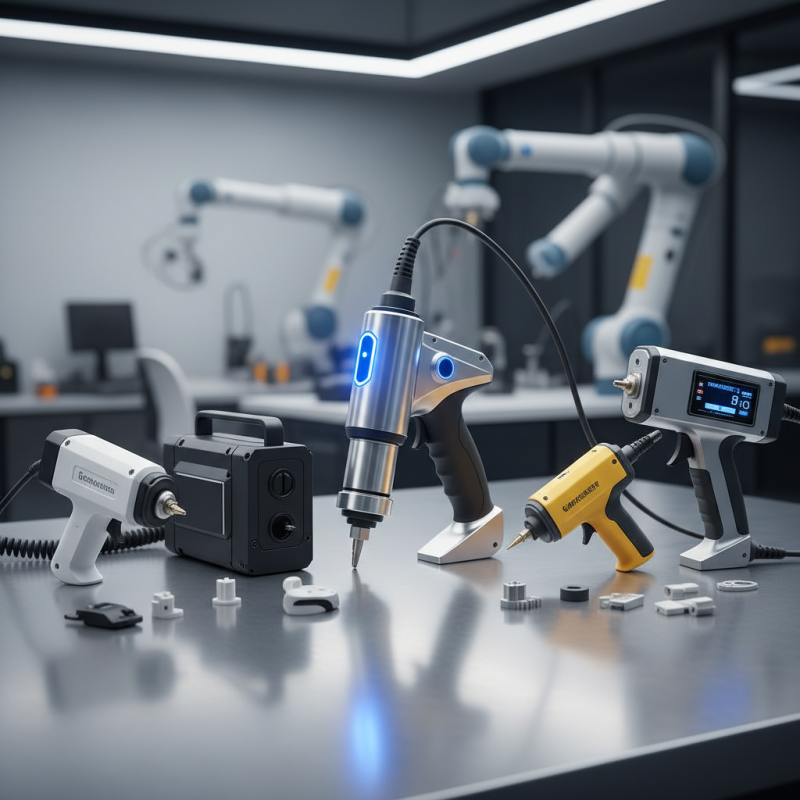
Ultrasonic hand welders are essential tools in various industries. They provide precise control over the welding process, making them ideal for delicate materials. These tools are widely used in textiles, plastics, and electronics. The ability to create strong welds without the need for additional adhesives is a significant advantage.
Applications range from automotive parts to medical devices. Ultrasonic welding ensures a quick and clean join, reducing the need for mechanical fasteners. This technology is particularly useful in the assembly of intricate products. However, users must pay attention to the machine settings. Incorrect parameters can lead to poor weld quality.
The versatility of these welders is impressive, yet it requires skill and training to operate them effectively. This highlights the importance of expertise in the operator. Understanding the nuances of various materials can impact the final product's quality. Continuous learning and adapting to new developments in ultrasonic technology is crucial.
Criteria for Selecting the Best Ultrasonic Hand Welder Models
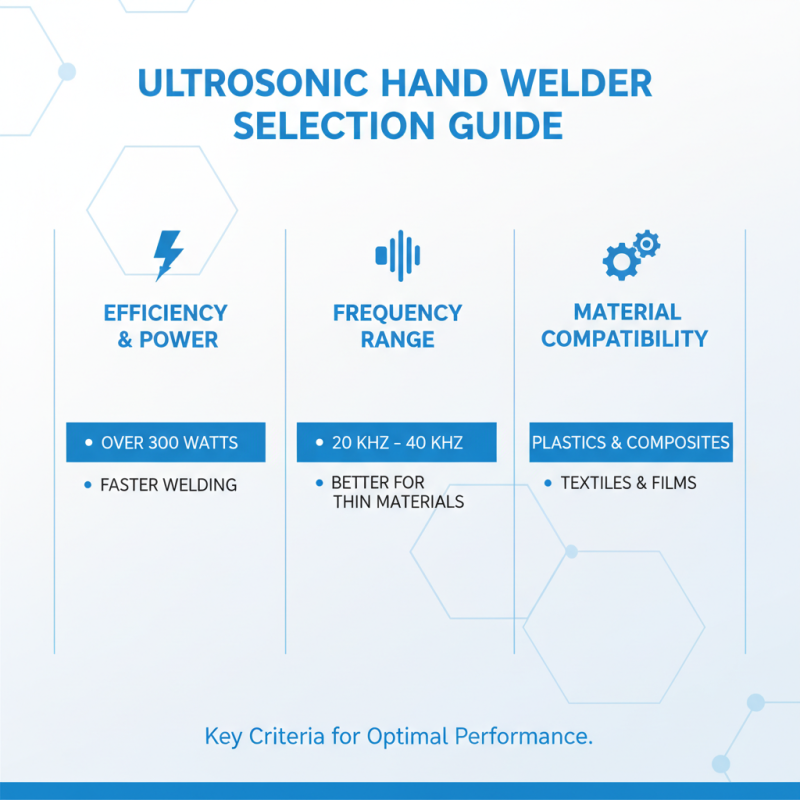
When selecting the best ultrasonic hand welder models, various criteria must be considered. Efficiency and output power are essential. Many high-performing welders provide over 300 watts of power, ensuring faster welding times and improved quality. Consider the frequency range too; devices operating between 20 kHz and 40 kHz typically yield better results, especially for thinner materials.
User-friendliness is another key factor. Models with ergonomic designs reduce fatigue and allow for extended use without discomfort. Look for features like adjustable amplitude and automatic tuning, which greatly enhance usability. Reports indicate that welders with these features increase productivity by up to 30%.
Tips: Make sure to check if the machine includes proper safety features. This guarantees protection during operation and prevents accidents. Always evaluate after-sales support; reliable service can be critical if issues arise.
Lastly, consider durability. Quality materials contribute to longevity. Welders that encounter a lot of wear and tear may not perform efficiently over time. Manufacturers often claim their products are built to last, but user reviews can offer insight that raw specs don’t reveal.
Top 5 Ultrasonic Hand Welder Models Reviewed
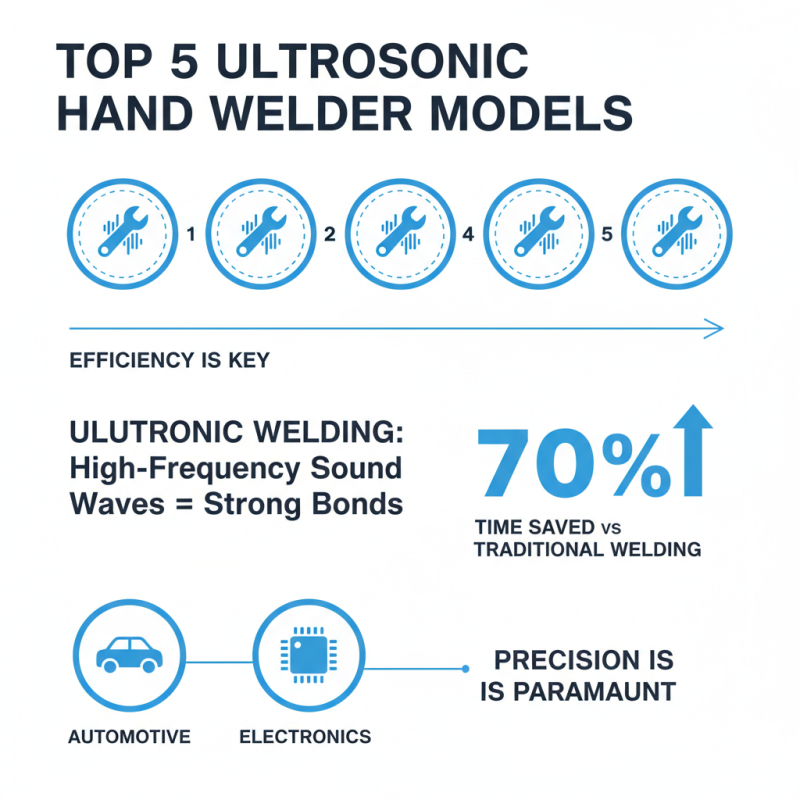
When considering the top ultrasonic hand welders, efficiency is key. Ultrasonic welding relies on high-frequency sound waves to create strong bonds. According to recent data, around 70% of the time spent in traditional welding can be saved using ultrasonic methods. This efficiency is particularly vital for industries such as automotive and electronics, where precision is paramount.
Many models offer various features, but finding the right balance of power and control is crucial. Some welders provide adjustable frequency settings, enhancing flexibility across different materials. In contrast, others may have limited settings, impacting functionality. A report by the Welding Institute indicates that well-designed ultrasonic systems can achieve welds with 99% material integrity. Yet, achieving such results often requires skilled operators who truly understand their equipment.
Maintenance of ultrasonic welders is another aspect to consider. Regular calibration is critical for maintaining efficiency. A study from the Journal of Manufacturing Processes highlights that up to 15% of production downtime is due to equipment malfunction. Operators must be prepared to troubleshoot common issues to avoid disruptions in their workflow. Understanding these nuances can lead to more informed decisions and enhanced production outcomes.
Comparison of Features and Benefits of Each Model
When exploring the top ultrasonic hand welder models, it's vital to look at key features and benefits. These welders are designed for efficiency. They enhance productivity in various industries. A recent report by the International Journal of Advanced Manufacturing Technology states that ultrasonic welders can increase production rates by over 25% compared to traditional methods.
Some models offer adjustable frequency settings. This feature allows for better control and precision in various applications. Advanced digital controls increase reliability too. These enhancements lead to fewer defects and higher quality welds. However, users must be cautious. Not every model may handle all materials equally well. Testing different settings is crucial to find the right balance.
Tips: For best results, always keep the ultrasonic welder clean. Dirt can affect performance. Regular moisture checks also help prevent equipment failure. Consider investing in training for staff. Knowledgeable operators make a significant difference in production efficiency.
Top 5 Ultrasonic Hand Welder Models for Efficient Welding
| Model |
Power (W) |
Welding Speed (s) |
Weight (kg) |
Features |
| Model A |
500 |
2.5 |
1.2 |
Compact Design, Adjustable Temperature |
| Model B |
600 |
2.0 |
1.5 |
High Precision, Fast Heating |
| Model C |
700 |
1.8 |
1.3 |
Cordless Operation, Ergonomic Handle |
| Model D |
800 |
1.5 |
1.4 |
Integrated Pulse Function, Versatile Applications |
| Model E |
900 |
1.2 |
1.1 |
Variable Amplitude Control, Lightweight |
User Feedback and Performance Insights for Ultrasonic Welders
When selecting ultrasonic welders, user feedback often highlights key performance aspects. Many users appreciate the speed and precision these machines offer. Efficiency is critical in production environments, and ultrasonic welders can significantly reduce cycle times. However, some users report initial setup challenges, suggesting a learning curve for optimal operation.
Performance insights reveal a diverse range of experiences. While some operators praise the consistency of weld quality, others raise concerns about durability. Users have noted that regular maintenance is essential to sustain performance levels. Additionally, some models may require frequent adjustments, which could hinder production efficiency and increase downtime.
Many users suggest that training plays a vital role in maximizing the capabilities of ultrasonic welders. Proper knowledge enhances user confidence and improves overall results. However, not all companies provide adequate training, leaving operators to navigate issues alone. This gap in training can lead to frustration and inconsistent welding outcomes, making it imperative for businesses to prioritize both support and education in their equipment investment decisions.
Top 5 Ultrasonic Hand Welder Models Performance Comparison