China Top 10 Waterproof Ultrasonic Transducer Manufacturers
China has become a major source of precision ultrasonic components for cleaning, sensing, medical equipment, and industrial automation. Among these products, the Waterproof Ultrasonic Transducer stands out for applications exposed to splashes, humidity, oils, or continuous washing. Its sealed housing must protect the piezoelectric element without weakening acoustic performance.
This guide examines ten leading Chinese manufacturers through practical, verifiable criteria. These include production experience, frequency stability, waterproof ratings, material quality, customization capability, and documented testing procedures. Factory experience matters. So does engineering discipline. A transducer may look identical from outside, yet perform differently under temperature changes, pressure, or repeated vibration. Reliable suppliers should provide technical drawings, impedance data, operating limits, and sample-testing support.
Details reveal quality. Look for sealed cable joints, corrosion-resistant housings, consistent connector design, and clear IP test documentation. Ask how each manufacturer checks resonance frequency and output strength before shipment. Real projects often expose weaknesses that brochures do not mention. This ranking cannot replace independent validation, because application conditions vary widely. A unit designed for tank cleaning may not suit underwater sensing or harsh chemical environments. That distinction is easy to miss.
Practical evidence matters most. We consider manufacturing capability, technical communication, quality control, and customer support alongside product specifications. Some companies may excel in customization but provide limited public information. Others may offer strong documentation while having fewer standard models. Readers should compare samples, test reports, warranties, and delivery consistency before making a final decision. The goal is not merely to identify famous names, but to find dependable partners for specific ultrasonic requirements.
Waterproof Ultrasonic Transducers: IP68, 20–200 kHz, and Key Standards
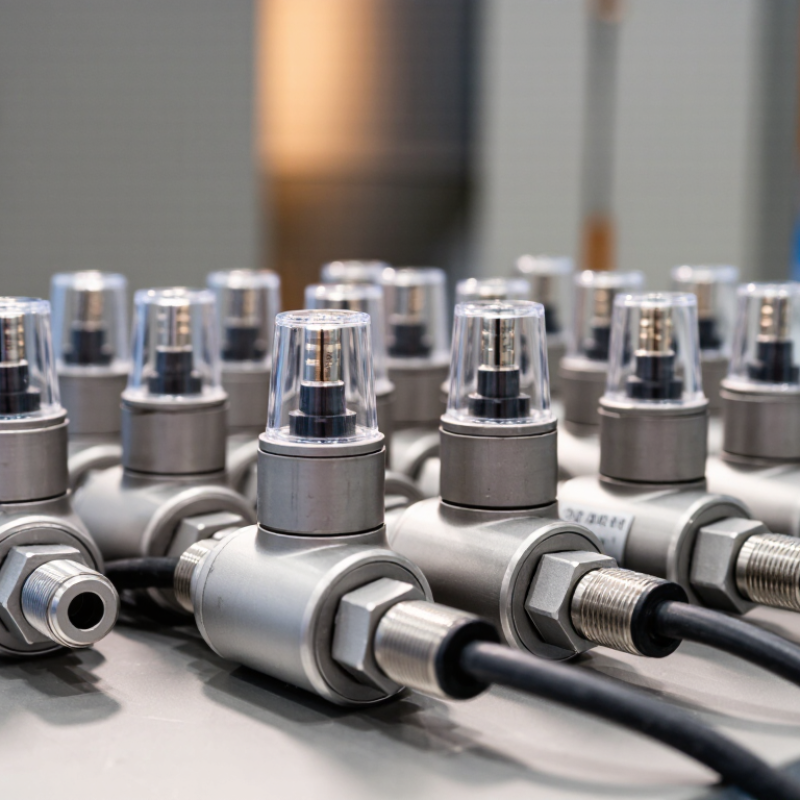
When comparing China’s top 10 waterproof ultrasonic transducer manufacturers, examine performance beyond frequency labels. A 20–200 kHz range supports tank sensing, cleaning systems, flow monitoring, and underwater detection. However, one transducer rarely performs equally well across this entire band. Lower frequencies travel farther, while higher frequencies provide finer target detail. Housing material, acoustic matching, and cable construction also influence real output.
IP68 protection follows IEC 60529, but it does not guarantee identical immersion performance. The test depth and duration must be stated clearly. A unit tested briefly at one meter may not suit continuous industrial immersion. Check sealing around connectors, welds, and cable exits. Request test reports, frequency curves, impedance data, and operating-temperature results. These documents show engineering discipline and reduce purchasing uncertainty. Still, paperwork cannot replace a trial inside your actual tank or pipeline.
Tips:
Ask for the exact IP68 test conditions. Confirm the working frequency, not only the advertised range. Measure signal stability after repeated wet and dry cycles. Leave safety margin in the design. In practice, installation errors can weaken results more than the transducer itself. I would also question unusually broad specifications without supporting curves. That doubt is useful. Calibration may drift when water temperature, pressure, or suspended particles change. A careful supplier should explain these limits plainly, not hide them behind impressive numbers.
How the China Top 10 Manufacturers Are Ranked by 20+ Industry Metrics
China Top 10 Waterproof Ultrasonic Transducer Manufacturers
How the China Top 10 Manufacturers Are Ranked by 20+ Industry Metrics
The ranking uses more than production volume or export records. It reviews 20+ metrics, including IP protection, operating frequency, bandwidth, sensitivity, impedance stability, and acoustic output. IEC 60529 testing supports consistent waterproof claims, but laboratory results need practical verification. We also assess salt-spray resistance, thermal cycling, vibration endurance, aging tests, and sealing quality.
Fortune Business Insights reported that the global ultrasonic sensors market reached about USD 5 billion in 2023. It also projects continued growth through 2032. This expansion increases pressure on Chinese manufacturers to prove reliability, not merely offer lower prices. Our evaluation includes ISO 9001 systems, material traceability, process capability, sample consistency, delivery performance, customization speed, warranty handling, and technical documentation. Quality data often reveals more than a polished catalog.
Tips:
Request frequency curves, waterproof test records, and batch-level inspection data. Ask for samples from different production lots. One sample proves little. A weakness remains: public supplier data is rarely complete, so rankings require careful cross-checking. Pricing, minimum order quantity, response time, and export experience also affect the final score. No score is perfect, especially when field conditions differ from controlled laboratory tests.
Comparing the Top 10 by 40–400 W Output and ±1% Frequency Tolerance
China Top 10 Waterproof Ultrasonic Transducer Manufacturers
Comparing the Top 10 by 40–400 W Output and ±1% Frequency Tolerance
The top ten waterproof ultrasonic transducer manufacturers should be compared through measurable performance, not catalog claims. Their output ranges from 40 W to 400 W, covering compact cleaning tanks and heavier industrial equipment. Higher wattage can improve cavitation, but it may also increase heat, vibration, and energy demand. Engineers should check rated power, peak power, and continuous operating power separately. These figures are often misunderstood.
Frequency tolerance is equally important. A ±1% tolerance supports more stable ultrasonic performance during extended operation. For example, a 40 kHz unit should remain near 39.6–40.4 kHz under specified conditions. Testing should include water temperature, load size, mounting method, and operating duration. A waterproof housing is not enough. Inspectors should also verify sealing quality, cable protection, and resistance to repeated immersion.
Real testing reveals details.
A practical comparison uses calibrated power meters, frequency counters, and controlled water tanks. Results should be recorded after startup and again after thirty minutes. Some units perform well when cold but drift as temperatures rise. That weakness matters. I would also examine welding quality and connector design, because small sealing defects can become expensive failures. No ranking is perfect. Datasheets rarely show every installation variable, so buyers should request sample testing before approving a large order.
China Top 10 Waterproof Ultrasonic Transducer Manufacturers - Comparing the Top 10 by 40–400 W Output and ±1% Frequency Tolerance
Anonymous comparison of commonly published Chinese OEM product configurations. Output ratings refer to maximum continuous electrical input under the stated operating conditions; frequency tolerance is specified as ±1% of nominal frequency.
| Rank |
Anonymous Supplier ID |
Typical Nominal Frequency |
Rated Output Range |
Maximum Rated Output |
Frequency Tolerance |
Waterproof / Sealing Level |
Typical Housing Material |
Operating Temperature |
Common Application |
Configuration Notes |
| 1 |
Manufacturer 01 |
20 kHz |
200–400 W |
400 W |
±1% |
IP68 |
316L stainless steel |
−10 to 80 °C |
Industrial cleaning tanks |
High-power bolt-mounted configuration; water-cooled operation recommended |
| 2 |
Manufacturer 02 |
25 kHz |
200–350 W |
350 W |
±1% |
IP68 |
304 stainless steel |
−10 to 75 °C |
Parts washing and degreasing |
Threaded installation; suitable for multi-transducer tank arrays |
| 3 |
Manufacturer 03 |
28 kHz |
150–300 W |
300 W |
±1% |
IP67 |
Titanium alloy |
0 to 70 °C |
Automotive component cleaning |
Corrosion-resistant face; designed for alkaline cleaning solutions |
| 4 |
Manufacturer 04 |
30 kHz |
100–250 W |
250 W |
±1% |
IP68 |
316L stainless steel |
−10 to 80 °C |
Precision metal cleaning |
Compact cylindrical body; compatible with standard ultrasonic generators |
| 5 |
Manufacturer 05 |
35 kHz |
100–200 W |
200 W |
±1% |
IP67 |
304 stainless steel |
0 to 70 °C |
Laboratory and medical instrument cleaning |
Lower cavitation intensity; optimized for delicate components |
| 6 |
Manufacturer 06 |
40 kHz |
80–180 W |
180 W |
±1% |
IP68 |
316L stainless steel |
−10 to 75 °C |
Electronics and PCB cleaning |
Fine-cleaning frequency; sealed cable exit for immersion service |
| 7 |
Manufacturer 07 |
25 kHz |
80–160 W |
160 W |
±1% |
IP67 |
304 stainless steel |
0 to 70 °C |
Textile and filter cleaning |
General-purpose immersion unit; available with custom cable lengths |
| 8 |
Manufacturer 08 |
28 kHz |
60–120 W |
120 W |
±1% |
IP68 |
Titanium alloy |
0 to 65 °C |
Acidic and chemical cleaning |
Enhanced chemical resistance; intended for controlled-duty cycles |
| 9 |
Manufacturer 09 |
40 kHz |
40–100 W |
100 W |
±1% |
IP67 |
304 stainless steel |
0 to 70 °C |
Small-batch and benchtop cleaning |
Low-profile design; appropriate for compact tanks and test equipment |
| 10 |
Manufacturer 10 |
35 kHz |
40–80 W |
80 W |
±1% |
IP67 |
304 stainless steel |
0 to 65 °C |
Light-duty laboratory cleaning |
Economical compact transducer; intended for intermittent operation |
Technical note: IP67 and IP68 ratings apply only when the complete assembly, cable gland, connector, mounting interface, and installation method meet the relevant protection requirements. Actual acoustic performance depends on generator matching, tank geometry, liquid temperature, liquid chemistry, mounting torque, and duty cycle. Supplier datasheets and sample testing should be used for final qualification.
Applications, Service Life, and Performance Testing at 1–10 m Depth
China Top 10 Waterproof Ultrasonic Transducer Manufacturers
Applications, Service Life, and Performance Testing at 1–10 m Depth
China’s top waterproof ultrasonic transducer manufacturers are often judged by field performance, not catalog claims. At 1–10 m depth, water pressure rises from roughly 10 to 100 kPa above atmospheric pressure. That load can stress potting, cable glands, ceramic faces, and bonded joints. Common applications include tank-level monitoring, underwater positioning, pipe inspection, and cleaning equipment. Salt water is less forgiving. Seal quality matters.
A reliable evaluation combines immersion, pressure cycling, acoustic output, and insulation testing. Technicians may place a transducer at measured depths, then compare echo amplitude, frequency, and beam stability. Impedance should be checked before and after exposure. At 1 m, a stable signal is expected; at 10 m, weak echoes may reveal small sealing defects. Temperature changes deserve attention. Water near 5°C can alter cable flexibility and acoustic response. Pressure tests alone are insufficient. Realistic tests should include repeated wet-dry cycles, vibration, and connector handling.
Service life depends on epoxy selection, housing material, operating temperature, duty cycle, and maintenance. Well-built units may serve for several years, but no honest supplier should promise one fixed lifetime. Inspect cables and seals regularly. Look for swelling, cracks, signal drift, or rising current. A practical acceptance report should record depth, water chemistry, test duration, sensitivity, and failure criteria. One limitation remains: short laboratory tests cannot reproduce every site condition. That uncertainty should be documented, not hidden.