Leave Your Message
Choosing the 2026 best Ultrasonic Hand Welder requires more than comparing prices or advertised power. Global buyers need a tool that performs reliably beside a production bench, inside a repair station, or on a compact assembly line. The right model should deliver stable ultrasonic energy, controlled pressure, and repeatable results across suitable thermoplastics and thin metal components. It should also offer clear controls, replaceable contact parts, and practical technical support.
Dr. David J. Grewell, a recognized researcher in ultrasonic welding and plastics joining, has emphasized, “The process window must be understood before the equipment is selected.” That principle matters. A welder may look impressive on a specification sheet, yet fail when the horn tip is poorly matched, the joint design is weak, or material moisture changes. Experience exposes those gaps.
This guide examines the features that matter to international purchasers. It considers operating frequency, amplitude adjustment, trigger control, weld-time consistency, ergonomic weight, and maintenance access. It also reviews documentation, training, spare-part availability, and compatibility with regional electrical systems. These details can decide whether a tool saves labor or creates repeated rejects.
Real workshops are rarely perfect. Operators may press at slightly different angles. Components may arrive with small dimensional variations. A good Ultrasonic Hand Welder should tolerate reasonable variation, but no machine can correct poor joint design indefinitely. That limitation deserves attention.
The comparison will therefore balance performance with practical ownership. It will help buyers assess credible specifications, identify hidden costs, and select equipment suited to their materials, workload, and quality expectations in 2026.
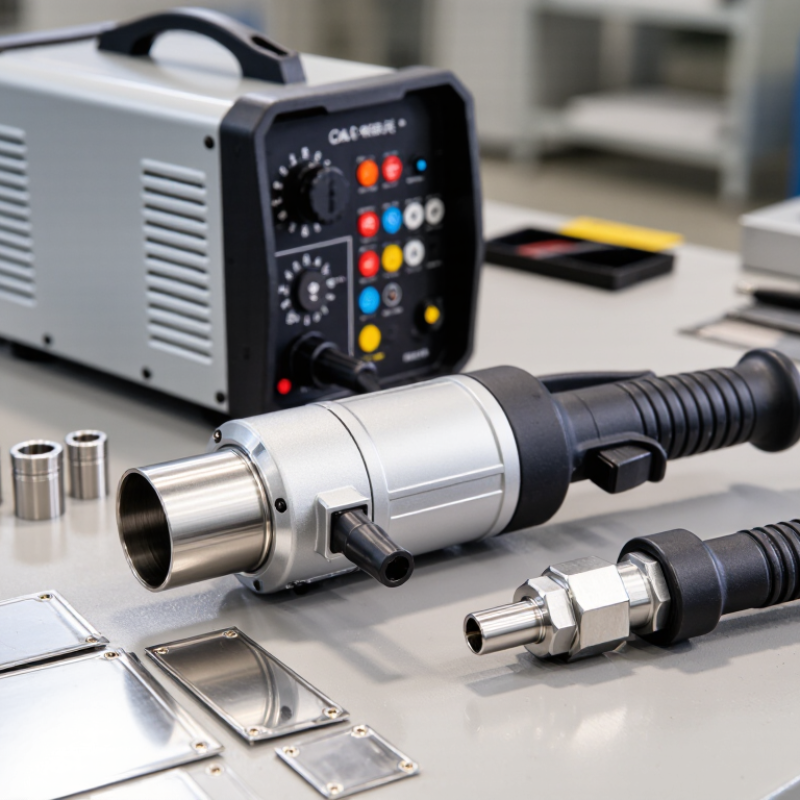
2026 Best Ultrasonic Hand Welder for Global Buyers?
An ultrasonic hand welder joins thermoplastic parts through high-frequency mechanical vibration. The horn presses against the joint while vibrations create frictional heat. This heat softens the plastic surface, then pressure forms a solid molecular bond. No open flame is used. The process usually finishes within seconds.
In practical workshops, operators use handheld systems for small housings, wiring parts, filters, and irregular assemblies. The tool feels compact, but correct pressure matters greatly. Too little pressure creates weak bonding. Too much pressure can mark the surface or distort thin plastic. According to MarketsandMarkets’ 2023 industry analysis, the ultrasonic welding market is projected to grow at roughly 7% annually through the forecast period. This growth reflects wider automation, electric mobility, medical devices, and lightweight packaging. However, market growth does not guarantee every handheld unit performs well. That part deserves careful testing.
Tips: Check the material pair, frequency, horn shape, amplitude, and trigger control. Request weld samples before purchasing. Measure pull strength and inspect cross-sections, not only appearance. A clean weld can still fail internally. For global buyers, confirm electrical compatibility, spare-part access, operator training, and documented safety testing. ISO 20457 guidance on plastics welding can support process validation, although it does not replace application-specific trials. One overlooked issue is operator fatigue. Handheld tools may seem simple, yet repeated pressing changes consistency during a long shift. A small fixture may improve results more than a stronger generator.
An ultrasonic hand welder uses high-frequency mechanical vibration to generate localized heat at the joint between thermoplastic parts. When pressure is applied, the softened plastic forms a molecular bond that solidifies after the vibration stops.
| Data Dimension | Typical Technical Data | How It Works or What It Indicates | Buyer Considerations for 2026 |
|---|---|---|---|
| Operating principle | High-frequency mechanical vibration combined with controlled clamping force | Vibration creates frictional and viscoelastic heat at the contact area, allowing compatible thermoplastics to fuse without external heating. | Choose a system with stable pressure control and repeatable vibration output for consistent weld quality. |
| Common operating frequencies | 20 kHz, 30 kHz, 35 kHz, or 40 kHz | Lower frequencies generally provide greater amplitude and welding force, while higher frequencies are commonly used for smaller or more delicate components. | 20 kHz is often suitable for larger or tougher parts; 30–40 kHz is commonly considered for small, thin, or precision components. |
| Typical electrical power range | Approximately 500–2,000 W, depending on frequency and application | Power capacity affects the tool’s ability to maintain vibration under load. It is not the only factor determining weld strength. | Match power to material, joint design, component size, and required cycle time instead of selecting the highest rating alone. |
| Typical weld time | Approximately 0.1–2.0 seconds per weld for many thermoplastic applications | The vibration period is short because heat is generated directly at the joint. Actual time depends on material, thickness, horn design, and joint geometry. | Request sample testing with production parts; laboratory timing may differ from real production conditions. |
| Materials generally suitable | Many thermoplastics, including ABS, polypropylene, polyethylene, polystyrene, polycarbonate, nylon, and PET-based materials | Materials must soften and flow under ultrasonic energy. Similar or compatible melting behavior generally improves weldability. | Check resin grade, fillers, moisture content, additives, and compatibility before approving a process. |
| Materials generally unsuitable | Thermosetting plastics, fully cured rubber, glass, ceramics, and most metals as conventional plastic weld joints | These materials do not soften in the same reversible way as thermoplastics, so a normal ultrasonic plastic weld cannot form. | For mixed-material assemblies, consider staking, embedding, metal welding, adhesives, or mechanical fastening as alternatives. |
| Amplitude range | Commonly adjustable within approximately 10–50 micrometres, depending on the converter, booster, and horn | Amplitude is the vibration displacement at the horn tip. Excessive amplitude can damage parts, while insufficient amplitude may produce weak or incomplete welding. | Use an amplitude profile recommended for the selected material and joint design, then validate it through destructive testing. |
| Clamping force | Typically adjustable from light contact pressure to several hundred newtons; exact capacity varies by tool design | Pressure holds the parts together and transfers vibration. Too little force can cause slippage; too much force can deform the assembly or restrict energy transfer. | Look for adjustable force, a stable trigger mechanism, and an ergonomic design that reduces operator fatigue. |
| Horn and sonotrode material | Commonly hardened steel, titanium, or aluminium, selected according to wear, frequency, and application | The horn transfers vibration from the transducer to the workpiece. Its shape and resonant tuning strongly affect weld uniformity. | Confirm that the horn can be customized to the joint geometry and that replacement or retuning support is available. |
| Weldable joint features | Energy directors, shear joints, stepped joints, and embedded-component interfaces | Purpose-designed joint features concentrate ultrasonic energy and guide molten plastic to the intended bonding area. | Design the joint before purchasing the tool; flat butt joints without an energy-concentrating feature may be difficult to weld reliably. |
| Control modes | Time, energy, distance, power, or collapse control, depending on the generator | Time-based control stops vibration after a preset duration. Energy, distance, and collapse modes can provide better process monitoring for critical assemblies. | For high-volume or quality-sensitive production, prioritize data logging, pass/fail limits, and process traceability. |
| Cooling requirement | Air cooling is common; some high-duty systems may require enhanced heat dissipation | Converters and generators can accumulate heat during repeated cycles, which may affect output stability. | Check duty-cycle specifications, ventilation requirements, and ambient-temperature limits for the intended workplace. |
| Typical applications | Plastic housings, filters, packaging components, medical disposables, wire splices, nonwoven fabrics, and small assemblies | The process is well suited to clean, fast joining where adhesives, screws, or additional consumables are undesirable. | Confirm whether the application requires hermetic sealing, particulate control, cosmetic quality, or embedded-metal compatibility. |
| Production advantages | Fast cycle time, no added adhesive, low heat-affected area, and limited consumable waste | Energy is concentrated at the joint rather than heating the entire part, which can reduce overall thermal exposure. | Evaluate total cost using cycle time, tooling, maintenance, operator training, and rejected-part rates. |
| Main limitations | Joint access, material compatibility, part geometry, tool alignment, and transmitted vibration can limit performance | Ultrasonic energy must reach the joint effectively. Large, flexible, highly damped, or poorly supported parts may be challenging. | Perform application trials using final materials and production tolerances before placing a large equipment order. |
| Noise and operator safety | Audible noise can occur, especially around 20 kHz systems or during certain part geometries | Noise level depends on frequency, tool condition, part design, and operating environment. Pinching and unexpected tool movement are also safety concerns. | Use guarding where practical, provide operator training, follow local workplace-noise rules, and consider hearing protection when required. |
| Recommended validation tests | Visual inspection, peel or tensile testing, leak testing, dimensional checks, and weld-strength consistency testing | Different tests measure different failure modes, including incomplete fusion, over-welding, leakage, cracking, or cosmetic damage. | Define acceptance criteria using the actual product’s function and applicable industry or regulatory requirements. |
Note: The figures shown are typical industry ranges for general guidance. Actual performance depends on the generator, converter, booster, horn, thermoplastic grade, joint design, clamping method, and operating conditions.