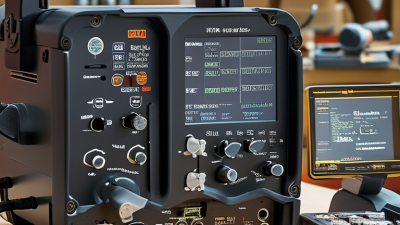
Choosing an Ultrasonic Welder For Sale in 2026 requires more than comparing prices online. Buyers must connect machine performance with actual production needs, material types, and daily output. A compact welder may suit small plastic components, while automotive housings often require greater amplitude control and stronger tooling support.
Start with the joint design. Examine the plastic resin, part thickness, weld area, cycle time, and acceptable appearance. A 20 kHz system may handle larger assemblies, while higher-frequency equipment can provide finer control for smaller parts. Ask for verified welding samples, not only attractive catalog photographs. The weld should resist separation, show consistent bonding, and avoid excessive flash.
Supplier experience matters. Reliable manufacturers explain horn design, generator stability, pressure control, maintenance intervals, and operator training. They should also provide clear specifications, test records, warranty terms, and after-sales support. Independent quality certifications can add confidence, but certificates alone do not prove suitable performance.
Do not ignore installation details. Check electrical requirements, floor space, noise exposure, spare-part access, and compatibility with your existing line. A low purchase price can become expensive when custom tooling or repeated adjustments are needed. I have seen buyers focus on wattage and overlook fixture rigidity. That mistake is easy to make.
The best decision comes from measured evidence. Compare cycle data, sample results, service response, and total ownership cost. Leave room for uncertainty. Supplier claims may require independent verification before approval. This guide explains how to evaluate an Ultrasonic Welder For Sale with practical judgment, technical accuracy, and a clear focus on dependable production.
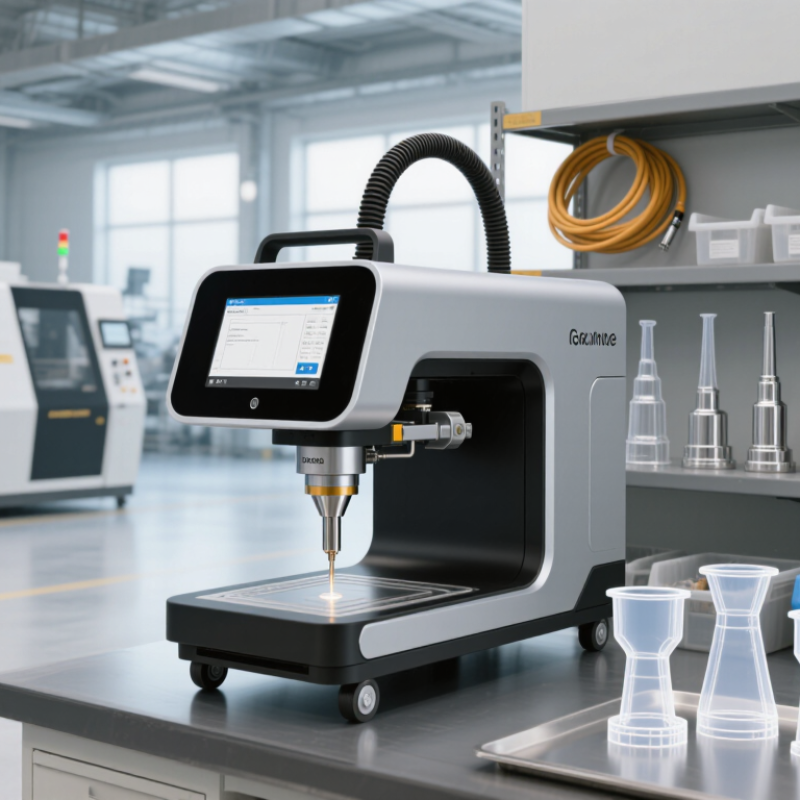
Define your welding requirements before comparing machines. Identify the materials, joint design, part dimensions, and acceptable weld strength. Polypropylene housings may need different amplitude settings than glass-filled nylon components. Record the target cycle time, daily volume, and planned operating shifts. Small details matter. A 0.3-second cycle can change annual output significantly.
Grand View Research estimated the ultrasonic welding machine market at approximately USD 1.6 billion in 2023, with growth continuing at about 9.5% annually through 2030. This expansion reflects wider automation demand, but market growth does not guarantee the right machine for your process. The International Federation of Robotics reported 541,302 industrial robot installations worldwide in 2023. Therefore, check whether the welder supports automation signals, remote monitoring, and repeatable tool positioning. Ask for actual sample welds using your production parts, not generic plastic coupons. Measure tensile strength, flash, energy consumption, and cycle stability across several batches. A polished demonstration can hide variation. It happens.
Set a realistic production goal for 2026. Include ramp-up time, operator training, tooling replacement, and maintenance access. Calculate total ownership cost rather than focusing only on purchase price. I would also challenge optimistic supplier claims. Confirm amplitude control, pressure range, alarm records, and data export before signing an order. A machine that welds quickly but lacks process evidence may create expensive rework. Your final choice should match today’s requirements while leaving measured capacity for tomorrow.
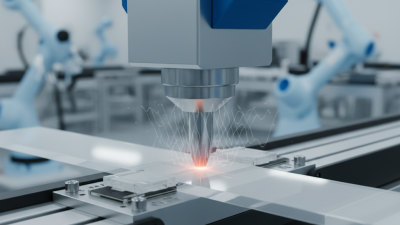
Choosing an ultrasonic welder in 2026 requires more than comparing machine prices. Frequency controls amplitude, heat distribution, and weld cycle speed. A 20 kHz system usually suits larger, tougher parts. A 30–40 kHz system offers finer control for small components and thin films. However, higher frequency does not automatically produce better welds. Tool geometry and material stiffness can matter more.
Power should match the joint, not the machine’s headline rating. Small plastic assemblies may need 800–1,500 watts, while thick housings or battery components can demand 2,000 watts or more. Grand View Research’s 2024 market report expects steady ultrasonic welding growth through 2030, driven partly by electric vehicle and electronics production. The International Energy Agency’s Global EV Outlook 2024 also reports rapidly expanding battery demand. This trend increases demand for repeatable welding, but it does not remove the need for testing. I have seen powerful systems damage delicate parts through excessive amplitude.
Tips: Define welding capacity using part size, material, joint design, and hourly output. Request sample welds using your actual components. Measure pull strength, leakage, flash, and cycle stability. Leave safety margin, but avoid buying excessive power. It can raise tooling costs and complicate process control. A 20 kHz welder may be the practical choice for a large enclosure, while a 35 kHz model may better protect a small sensor housing. The correct answer is sometimes less impressive than expected.
| Frequency | Typical Generator Power | Typical Welding Capacity | Recommended Materials and Parts | Typical Application | Key Selection Considerations |
|---|---|---|---|---|---|
| 15 kHz | 1,500–5,000 W | Large parts; commonly suitable for weld areas up to approximately 100–250 mm, depending on joint design and material | Large injection-molded parts made from compatible thermoplastics, including ABS, PP, PS, and some reinforced polymers | Automotive components, large housings, fluid reservoirs, and structural plastic assemblies | High amplitude and strong energy output; requires a rigid machine, carefully designed tooling, and sufficient fixture support |
| 20 kHz | 1,000–4,000 W | Medium-to-large parts; commonly suitable for weld areas up to approximately 50–150 mm | ABS, PP, PE, PS, PC, nylon, and other compatible thermoplastics; suitability depends on grade, moisture, fillers, and joint geometry | General industrial assembly, automotive trim, appliances, battery components, and large plastic housings | Best general-purpose range when higher amplitude, faster welding, and larger weld areas are required |
| 30 kHz | 600–2,000 W | Small-to-medium parts; commonly suitable for weld areas up to approximately 20–80 mm | Small thermoplastic components, electronic parts, medical disposables, and precision-molded assemblies | Compact housings, valves, filters, connectors, and small consumer products | Provides a balance between weld precision and output; generally needs less tooling mass than lower-frequency systems |
| 35 kHz | 400–1,500 W | Small parts; commonly suitable for weld areas up to approximately 10–50 mm | Thin-wall and detail-sensitive thermoplastic parts, including small electrical and medical components | Micro-assemblies, small enclosures, sensors, and delicate molded parts | Lower mechanical amplitude can help reduce marking and deformation, but it may be unsuitable for large or highly rigid parts |
| 40 kHz | 200–1,000 W | Very small parts; commonly suitable for weld areas up to approximately 5–30 mm | Small, thin, or detail-sensitive thermoplastic components with short weld paths | Micro-components, small electronic parts, cosmetic packaging, and precision laboratory products | Useful where surface appearance and dimensional control are more important than maximum weld size |
| 20–40 kHz | 300–2,000 W | Small-to-medium parts with narrow or irregular weld paths | Compatible thermoplastics that require controlled energy delivery and repeatable process parameters | Flexible production lines using interchangeable horns and fixtures | Choose the frequency only after checking horn design, joint type, material compatibility, and the required weld amplitude |
| 20 kHz for ultrasonic metal welding | 1,000–6,000 W | Electrical terminals, wire bundles, foils, and thin metal stacks; capacity depends strongly on alloy, cross-section, and weld tooling | Commonly used with copper, aluminum, nickel, and plated conductive materials | Wire harnesses, battery tabs, busbars, and electrical connections | Metal welding requires dedicated sonotrode design, clamping force, amplitude control, and process validation; plastic-welding specifications do not directly apply |
When choosing an ultrasonic welder for sale in 2026, inspect the controls before the frame. A clear touchscreen should show weld time, energy, pressure, amplitude, and trigger force. Data logging matters because small process changes can create invisible joint failures. The International Federation of Robotics reported 541,302 industrial robot installations in 2023, showing how strongly factories value repeatable automation. Your welder should support digital recipes, password levels, alarm history, and communication with production systems. Avoid systems that hide critical settings behind vague “automatic” modes. Convenient is not always controllable.
Material compatibility needs practical testing. Ultrasonic welding generally suits thermoplastics, but resin type, filler content, moisture, wall thickness, and joint design change the result. Check the supplier’s weld data for your exact material grade, not only a general polymer category. ASTM test methods can help compare tensile strength, but they cannot replace production trials. A good trial uses real parts, real tolerances, and several cycle settings. I would also examine the horn footprint closely; a beautiful weld on a flat sample may fail around a curved housing. This is where my own evaluation can become too optimistic.
Tips: Request sample welds and inspect cross-sections. Measure cycle variation across repeated runs. Ask whether amplitude remains stable under load. Keep an honest failure log. The Plastics Industry Association’s 2024 industry outlook highlights continuing pressure for efficiency and material optimization, so compatibility should include scrap rate, energy use, and rework—not only weld appearance. Expect some uncertainty. Real production is less polite than a brochure.
Evaluate machine features, controls, and material compatibility before comparing equipment.
The reference scores indicate selection priority on a scale from 1 to 5, where 5 represents a critical evaluation factor for most production applications. Amplitude control, weld-force control, cycle monitoring, and thermoplastic compatibility are especially important because they directly affect joint strength, repeatability, and process stability. Final selection should be confirmed through tooling trials using the intended part geometry and material grade.
Supplier quality should be checked beyond a polished website. Ask for factory records, weld samples, inspection reports, and customer references. A reliable supplier explains horn design, operating frequency, pressure control, and expected service life. Request a test using your actual materials. Plastic parts may look acceptable, yet fail after cooling or repeated stress. That small test can expose major weaknesses.
Safety must be visible in the machine, not hidden in a manual. Check guarding, emergency stops, electrical protection, noise control, and access restrictions. Ask which current safety standards the equipment follows in your market. Certificates should be traceable and relevant to the exact model. Training materials also matter. Poor instructions create avoidable risks. I would not accept vague promises about compliance.
Tips: Put after-sales support into the contract. Confirm warranty coverage, response times, spare-part availability, software assistance, and technician training. Ask whether remote diagnosis is possible and how service costs are calculated. A low purchase price can become expensive when one sensor stops production. Suppliers may provide impressive demonstrations, but daily support is harder to judge. Speak with existing users if possible. Their complaints may be more useful than praise. Leave room for doubt, and inspect every claim carefully.
How to Choose an Ultrasonic Welder for Sale in 2026?
Calculate total cost before comparing machine prices. MarketsandMarkets estimates the ultrasonic welding market will grow at about 10% annually through 2028, driven by automotive, medical, electronics, and packaging demand. Growth does not make every welder economical. A practical calculation includes the machine, horn, fixture, installation, operator training, maintenance, electricity, labor, and rejected parts. For example, a $20,000 welder may require $2,000 for tooling and integration. Add annual maintenance near 5% to 10% of equipment value, based on supplier service conditions. Energy is usually a minor cost, but poor setup can create expensive scrap.
Measure actual production needs, not advertised maximum output. Record weld time, cooling time, material type, joint size, and daily cycles. A 0.4-second cycle sounds impressive. It may fail when loading takes six seconds. The U.S. Department of Energy reports that industrial motor systems can represent a major share of factory electricity use, so efficient controls still deserve attention. Compare the cost per good part, using this formula: total annual cost divided by accepted output. Include downtime. PMMI industry reports continue to identify labor shortages and equipment flexibility as major packaging concerns. Choose clear controls, recipe storage, accessible spare parts, and documented validation support. I would also test ten thousand real assemblies before buying. That exposes tooling wear and inconsistent materials. A spreadsheet can be wrong. Your samples are better evidence.