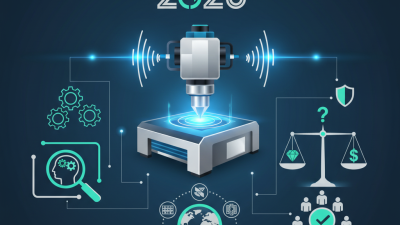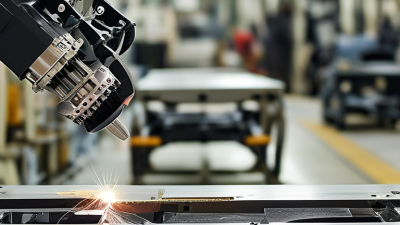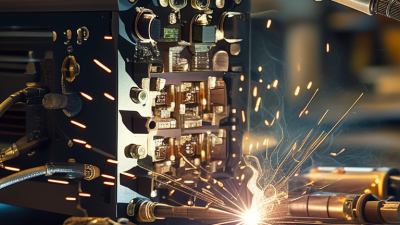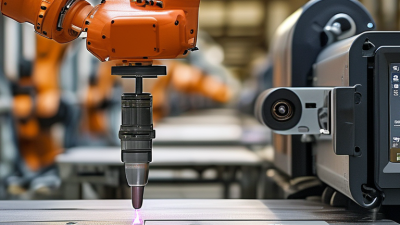
Choosing the right Ultrasonic Card Slab Welder requires more than comparing power ratings or attractive product photos. Global buyers need to understand sealing quality, operating speed, mold compatibility, maintenance access, and supplier support. These factors directly affect production consistency, labor costs, and long-term equipment value.
This guide examines the top 10 Ultrasonic Card Slab Welder types for different business needs. Some models suit small workshops handling limited batches. Others support high-volume operations with automated feeding, adjustable pressure, and programmable welding cycles. Details matter. A stable machine should create clean, even seals without damaging the card holder or leaving visible marks.
The comparison also considers practical experience from packaging and collectible-card production environments. Buyers can evaluate ultrasonic frequency, welding area, control systems, safety design, and replacement-part availability. Regional voltage requirements and technical service should not be overlooked. Fit varies. A compact welder may save space, but it can restrict future production growth. A larger automated system may improve output, yet demand higher investment and operator training.
No ranking is perfect. Supplier quality, material differences, and actual working conditions can change results. Therefore, product specifications should be verified through samples, videos, factory communication, and written warranty terms. Reliable purchasing decisions come from testing evidence, not advertising language. This overview offers a practical starting point for importers, manufacturers, distributors, and specialist buyers seeking consistent slab sealing performance across international markets.
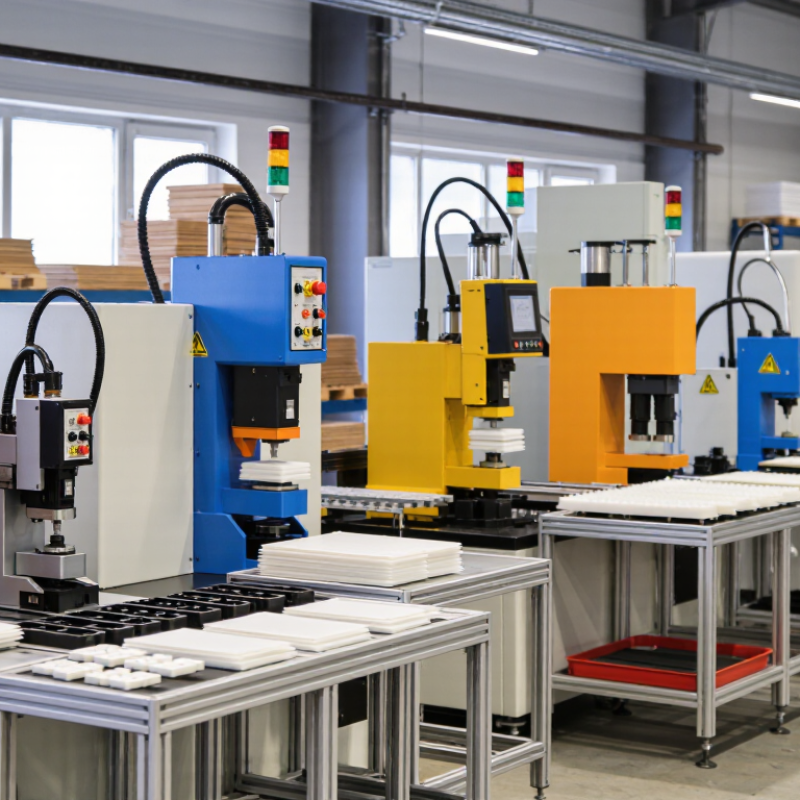
An ultrasonic card slab welder is a machine that seals two thermoplastic slab halves around a collectible card. It uses high-frequency vibration, controlled pressure, and heat created at the joint. The process usually takes less than a few seconds. No liquid adhesive is required.
The main working parts include an ultrasonic generator, transducer, horn, fixture, and anvil. The fixture holds the slab in a fixed position. The horn presses against a narrow welding line. Vibration then softens the plastic interface and forms a permanent bond. In production evaluations, consistent alignment often matters more than maximum power. A strong machine still produces poor results when the mold shifts slightly.
Different models use pneumatic, servo-driven, semi-automatic, or fully automatic systems. Some focus on one slab size, while adjustable designs support several formats. Buyers should check polymer compatibility, weld-line appearance, cycle control, and replacement-part access. Transparent plastic can show whitening, marks, or uneven pressure. Small defects become obvious under bright inspection lights.
Calibration is not optional. Operators should test vibration amplitude, holding time, pressure, and cooling behavior. A clean weld is not always the strongest weld. Excessive energy may distort corners or damage the card inside. Local service quality also deserves attention, especially when equipment crosses borders. Manuals can be clear, yet real troubleshooting may remain difficult. Testing sample slabs before purchase is a sensible, sometimes overlooked step.
Top 10 Ultrasonic Card Slab Welder Types for Global Buyers
How Ultrasonic Card Slab Welding Technology Works
Ultrasonic card slab welding joins thermoplastic halves through high-frequency vibration and pressure. A generator creates an electrical signal, while a piezoelectric converter changes it into mechanical motion. The booster amplifies this motion. Then, the horn transfers vibration to the slab’s weld line. Most systems operate near 20–40 kHz. Friction softens the plastic interface, and controlled pressure forms a solid molecular bond without adhesives.
For trading cards, precision matters more than raw power. The fixture must keep the slab flat and protect corners. Energy directors can focus vibration along a narrow sealing path. Amplitude, weld time, pressure, and hold time require careful adjustment. Grand View Research estimates the global ultrasonic welding machine market will grow at about 10% annually from 2024 to 2030. That growth reflects wider automation, but it does not guarantee perfect slabs. Warping, cloudy marks, and incomplete seals still appear during testing.
Tips: Check clamp alignment with a transparent sample. Measure weld strength and visual clarity together. Start with lower amplitude, then increase gradually. A faster cycle is not always better. ASTM D1002-style strength testing may help, although it is not designed specifically for card slabs. Record every setting, including room temperature. Small environmental changes can affect plastic behavior.
Ultrasonic card slab welders differ by structure, control, and production speed. The ten common types include manual benchtop, pneumatic press, servo-controlled, rotary indexing, linear conveyor, multi-head, automatic loading, vision-guided, cleanroom-ready, and modular systems. A benchtop model suits small batches and frequent format changes. Pneumatic machines offer steady pressure, but air quality directly affects repeatability. Servo systems provide controlled force and displacement. They cost more, yet they record useful process data.
Rotary and linear systems support continuous production. Multi-head welders reduce cycle time when several joints require sealing together. Automatic loaders limit handling marks on transparent slabs. Vision-guided models check card position before welding, which helps prevent crooked seams. Cleanroom-ready designs reduce dust around the horn and fixture. Modular systems allow future upgrades, although “future-ready” is sometimes an optimistic phrase. Buyers should inspect weld strength, surface clarity, cycle noise, tooling life, and emergency access during a factory trial. Ask for sample testing with your actual slab material and dimensions.
Tips: Keep the horn, anvil, and sealing surface aligned. A tiny offset can leave a visible white stress mark. Confirm the operating frequency, power range, fixture tolerance, and replacement tooling cost. Request maintenance records and operator training materials. Do not judge performance from speed alone; stable energy delivery matters more. We have seen fast machines create inconsistent corners when cooling time was ignored. That detail is easy to miss.
When comparing the top 10 ultrasonic card slab welder types, examine performance beyond advertised power. Check operating frequency, welding amplitude, cycle time, and pressure control. These factors affect seam strength, surface clarity, and production consistency. Ask for test data using your actual slab material and card thickness. A clean sample matters more than a polished specification sheet.
Compatibility begins with the horn, fixture, and slab dimensions. The horn must contact the welding area evenly, without marking corners or shifting the card. Confirm whether the machine supports your casing size, plastic formulation, and required tolerances.
Digital controls can record pressure and weld time, while pneumatic systems may offer simpler maintenance. Servo-driven equipment can provide precise movement, but its value depends on your production volume. Short trials reveal more.
Inspect results under normal lighting and after gentle handling. Measure seam uniformity at several points, not only the strongest-looking area. Review electrical requirements, guarding, noise levels, documentation, and technician training. Regional safety certification should match the installation country.
I have found that buyers sometimes compare maximum output instead of repeatability. That is an easy mistake.
Request several consecutive samples, because one successful weld proves very little. Leave room for adjustment; material batches and fixture wear can change results over time.
Top 10 Ultrasonic Card Slab Welder Types for Global Buyers
Global buyers should compare ultrasonic card slab welders by application, not appearance. Common types include benchtop, pneumatic, servo-driven, rotary, modular, and automated conveyor systems. Frequency, welding amplitude, cycle time, horn design, and fixture accuracy directly affect seam clarity. A practical trial should use real slabs, protective films, and different card thicknesses. Small details matter.
World Robotics 2024 reported 541,302 industrial robots were installed globally in 2023, showing stronger demand for repeatable automation. MarketsandMarkets’ 2024 ultrasonic welding analysis also expects continued market growth through 2028. Buyers should therefore check integration options, data logging, emergency controls, and replacement-part access. Electrical compatibility is essential across regions. So is operator training. A low purchase price may hide expensive tooling, customs delays, or limited technical support. I would not trust a perfect sample from one test.
Tips: Request at least three welding samples from each supplier. Measure peel strength, visual haze, flash, and dimensional change after cooling. Confirm frequency stability under continuous operation. Ask for factory acceptance records and calibration procedures. ISO 9001 certification can support quality control, but it does not guarantee weld performance. Review the actual process evidence. Not always the brochure.
| No. | Ultrasonic Welder Type | Typical Frequency | Typical Rated Power | Best-Suited Slab Format | Common Thermoplastic Compatibility | Typical Cycle Time | Automation Level | Key Buying Factors | Global Buyer Suitability |
|---|---|---|---|---|---|---|---|---|---|
| 1 | Bench-Top Pneumatic Ultrasonic Slab Welder | 20 kHz or 30 kHz | 800–2,000 W | Standard card slabs; small and medium batches | ABS, HIPS, selected PETG and other weldable thermoplastics | Approximately 1.5–4 seconds per weld cycle | Semi-automatic | Low footprint, adjustable pneumatic pressure, interchangeable tooling, operator accessibility, local compressed-air availability | Suitable for start-ups, laboratories, repair operations and regional production sites |
| 2 | Servo-Driven Precision Ultrasonic Welder | 20 kHz or 30 kHz | 1,000–3,000 W | High-consistency slabs requiring controlled force and displacement | ABS, HIPS, PETG and compatible engineering thermoplastics | Approximately 1–3 seconds per weld cycle | Semi-automaticClosed-loop | Force and position monitoring, repeatability, programmable travel, weld-energy control, data logging and fixture accuracy | Suitable for exporters and buyers requiring stable quality across multiple production shifts |
| 3 | Multi-Head Ultrasonic Card Slab Welder | 20 kHz or 30 kHz | 2,000–6,000 W total | Slabs with several weld points around the perimeter | ABS, HIPS, PETG and other compatible rigid thermoplastics | Approximately 2–5 seconds per complete slab | Semi-automaticMulti-point | Head synchronization, balanced amplitude, tooling alignment, weld-point spacing, maintenance access and spare transducers | Suitable for medium-to-high output where multiple joints must be completed in one cycle |
| 4 | Rotary-Index Ultrasonic Slab Welding Cell | 20 kHz or 30 kHz | 2,000–5,000 W total | Standardized slabs produced in continuous batches | ABS, HIPS, PETG and approved thermoplastic combinations | Approximately 3–8 seconds per indexing position | Automatic | Indexing accuracy, cycle synchronization, guarding, loading method, tooling changeover, reject handling and floor-space requirements | Suitable for factories seeking higher throughput without a fully robotic line |
| 5 | Linear-Transfer Automatic Ultrasonic Welder | 20 kHz or 30 kHz | 3,000–8,000 W total | High-volume production with repeatable slab dimensions | ABS, HIPS, PETG and compatible rigid thermoplastics | Approximately 2–6 seconds per slab, excluding loading and downstream inspection | AutomaticInline | Line takt time, conveyor integration, automatic feeding, barcode or traceability options, guarding, service support and spare-part availability | Suitable for large export-oriented plants and centralized manufacturing facilities |
| 6 | Robotic Pick-and-Place Ultrasonic Welding Cell | 20 kHz or 30 kHz | 2,000–6,000 W total | Multiple slab sizes or products requiring flexible handling | ABS, HIPS, PETG and other validated weldable thermoplastics | Approximately 4–10 seconds per slab, depending on robot travel and inspection | AutomaticRobotic | Robot payload, gripper design, vision alignment, safety fencing, programming capability, changeover time and integration responsibility | Suitable for facilities prioritizing labor reduction, flexible production and automated material handling |
| 7 | Digital Energy-Control Ultrasonic Welder | 20 kHz, 30 kHz or 35 kHz | 800–3,000 W | Premium slabs requiring documented weld consistency | ABS, HIPS, PETG and other materials confirmed through joint testing | Approximately 1–4 seconds per weld cycle | Semi-automaticDigital control | Amplitude control, weld-energy limits, pressure monitoring, recipe storage, alarm history, password levels and data export | Suitable for buyers needing quality records, repeatable recipes and controlled process parameters |
| 8 | Low-Frequency High-Amplitude Ultrasonic Welder | 15 kHz or 20 kHz | 2,000–6,000 W | Larger slabs, thicker walls or joints requiring greater mechanical energy | Rigid ABS, HIPS and other materials validated for high-amplitude welding | Approximately 2–6 seconds per weld cycle | Semi-automatic | Horn amplitude, joint design, flash control, vibration isolation, noise protection, material testing and fixture rigidity | Suitable for robust enclosures, thicker components and applications where 30–40 kHz systems may be insufficient |
| 9 | High-Frequency Fine-Detail Ultrasonic Welder | 30 kHz, 35 kHz or 40 kHz | 400–1,500 W | Small slabs, thin walls and compact weld features | Thin ABS, HIPS, PETG and other compatible thermoplastics | Approximately 0.8–3 seconds per weld cycle | ManualSemi-automatic | Fine horn geometry, low marking risk, small weld area, amplitude stability, precise fixture support and protection against cosmetic damage | Suitable for detailed products, low-force joints and operations emphasizing appearance |
| 10 | Modular Changeover Ultrasonic Welding Platform | 20 kHz or 30 kHz | 1,000–4,000 W | Mixed-size slabs and frequently changing product families | ABS, HIPS, PETG and other materials confirmed by application trials | Approximately 2–7 seconds per weld cycle | FlexibleSemi-automatic | Quick-change tooling, recipe management, fixture storage, modular horn design, operator training, validation procedure and future expansion | Suitable for contract manufacturers, distributors and buyers with varied global product requirements |