Leave Your Message

China Top 10 Green Ultrasonic Welder Manufacturers

China’s Green Ultrasonic Welder industry is moving from factory efficiency toward measurable environmental performance. This shift matters in battery, electronics, medical, and automotive production. The International Energy Agency reported nearly 14 million electric car sales worldwide in 2023. That growth increases demand for precise battery-module and cable connections. It also raises scrutiny of energy use, scrap, noise, and process consistency.

Grand View Research identifies ultrasonic welding equipment as a growing industrial technology market, supported by automation and lightweight material production. MarketsandMarkets also links market expansion with electric vehicles, consumer electronics, and advanced packaging. These reports show momentum, but they do not prove that every machine is genuinely green. A lower welding temperature can reduce process energy, yet compressed air, idle power, rejected parts, and maintenance still affect the footprint. The picture is not perfect.

Dr. Y. N. Zhou, author of Ultrasonic Welding, describes ultrasonic welding as “a solid-state joining process.” That short definition explains its practical value. It joins materials through high-frequency vibration, often without adhesives, solvents, or external heat. In a busy workshop, the difference appears clearly: shorter cycles, clean joints, and less visible residue around the horn.

This guide examines China’s top 10 Green Ultrasonic Welder manufacturers through engineering capability, energy management, automation, quality control, after-sales service, and documented environmental claims. Supplier ranking is never absolute. A low-power machine may still perform poorly if its tooling wears quickly. Buyers should verify test data, certification records, lifecycle support, and actual factory references before deciding.

China Top 10 Green Ultrasonic Welder Manufacturers

Definition and Role of Green Ultrasonic Welding

Definition and Role of Green Ultrasonic Welding

Green ultrasonic welding joins thermoplastic parts through high-frequency mechanical vibrations. Localized friction softens the interface without open flames, solvents, or added adhesives. The process often uses short cycles, controlled pressure, and limited material loss. These features can reduce workplace emissions and production waste.

The International Energy Agency’s Energy Efficiency 2023 report estimates that industry consumes about 37% of global final energy. Small process improvements can therefore matter at scale. Ultrasonic welding may lower energy demand compared with long thermal heating cycles. However, “green” is not automatic. Electricity sources, rejected parts, compressed air, tooling replacement, and machine standby loads affect the real footprint. The OECD Global Plastics Outlook reported only 9% of plastic waste was recycled in 2019. A clean weld cannot solve poor material selection or difficult end-of-life separation.

Tips: Measure energy per weld, cycle time, scrap rate, and horn lifespan. Test weld strength after aging, not only on fresh samples. Keep amplitude and pressure stable. Use renewable electricity where practical. Design joints for repair or separation when possible. Shorter cycles help.

Manufacturers should document these results under a clear life-cycle method, such as ISO 14040 principles. Data is often incomplete. That weakness deserves attention. A low-energy machine can still create waste when settings drift or operators skip inspection. Real green performance requires evidence from the production line, not attractive claims.

Key Technologies Used by Green Ultrasonic Welder Manufacturers

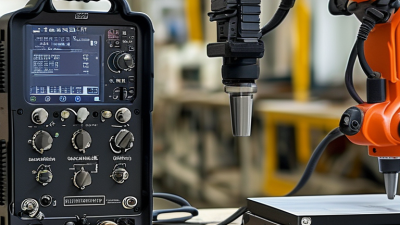
Green ultrasonic welder manufacturers now treat energy control as a design requirement, not a marketing phrase. Their systems convert electrical power into high-frequency mechanical vibration. Modern digital generators adjust frequency and amplitude in real time. This reduces wasted energy during unstable joints. A typical production cell can show power, weld time, pressure, and peak amplitude on one screen. Useful data exposes hidden losses. Standby power still matters. Some machines enter low-energy sleep mode after minutes of inactivity. Small savings become meaningful across continuous production.

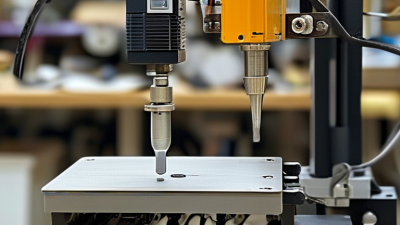
Servo-driven actuators provide another important improvement. They control collapse distance and joining force with repeatable motion. This avoids excessive pressure, rejected parts, and unnecessary rework. Closed-loop sensors can detect amplitude drift, tool wear, or incomplete contact. Operators can then correct the process before a full batch fails. Horn design also affects environmental performance. Properly tuned tooling transfers vibration efficiently, while poor alignment creates heat and noise. Lightweight alloys may reduce moving mass, but durability must not be sacrificed. That trade-off deserves testing.

Practical manufacturers validate these technologies through measured trials, not attractive specifications alone. Engineers compare watt-hours per weld, cycle time, reject rates, and maintenance intervals. They also examine ventilation needs around the equipment. Lower heat output can reduce factory cooling demand. Acoustic shielding protects workers and supports a calmer workspace. Still, digital efficiency claims can be incomplete without material-specific data. Different polymers respond differently to vibration, moisture, and surface contamination. Experienced teams record those variables before approving a production recipe. Sometimes the greener choice is slower. That is easy to overlook.

Top 10 Green Ultrasonic Welder Manufacturers in China

The Top 10 Green Ultrasonic Welder Manufacturers in China reflect a fast-changing manufacturing sector. These companies typically develop equipment for automotive parts, medical packaging, electronics, and battery components. Their main advantages include low material waste, precise joining, and short cycle times. Some models complete a weld in less than one second.

Grand View Research reported that the global ultrasonic welding machine market is expected to expand steadily through 2030, with automation and lightweight materials driving demand. MarketsandMarkets also identified electronics, electric vehicles, and medical products as major application areas in its 2024 industry analysis. Chinese manufacturers are responding with digital controls, servo-driven pressure systems, and energy monitoring software. These features help factories track weld time, amplitude, pressure, and power consumption.

Green performance is not only about electricity use. Stable welding can reduce rejects, excess adhesives, and discarded components. However, public energy data remains inconsistent across suppliers. That weakness deserves attention. Buyers should request measured power data, noise testing, maintenance records, and lifecycle information before selecting a manufacturer. Factory visits can reveal practical details, such as loose cables, poor ventilation, or difficult-to-clean worktables. Certification supports credibility, but it does not replace real production evidence. The strongest Chinese suppliers combine engineering experience, responsive technical service, and transparent testing records. Some still need improvement in carbon reporting and independent environmental verification.

How to Compare China’s Green Ultrasonic Welding Suppliers

How to Compare China’s Green Ultrasonic Welding Suppliers

Comparing green ultrasonic welding suppliers requires more than checking machine prices. Examine power consumption during welding, standby energy, compressed-air demand, and expected service life. Ask for measured data from a real production cycle, not only laboratory figures. A 20-kilowatt rating may sound impressive, but actual energy use depends on amplitude, weld time, material, and cooling settings.

Request sample welds using your actual components. Inspect joint strength, surface marks, flash, and dimensional consistency under a microscope. Suppliers should explain horn design, fixture accuracy, replacement intervals, and compatibility with recycled or bio-based plastics. Those materials can behave differently during vibration. Small changes in moisture can affect results.

A reliable supplier should provide traceable test records, equipment manuals, electrical documentation, and clear warranty terms. Check quality systems, worker safety practices, waste handling, and the origin of major components. A remote factory tour helps, but an independent audit gives stronger evidence. Ask how faults are diagnosed and how quickly spare parts can arrive.

Do not rely on one successful sample. Run repeated tests across several shifts. Record weld time, energy readings, rejection rates, and operator adjustments. My comparison sheets are never perfect; production conditions change. That is why I leave space for untested risks. A low quote can hide tooling revisions, software limits, or difficult after-sales support. The best discussion includes uncomfortable questions before a purchase order is signed.

Applications and Future Trends of Green Ultrasonic Welding

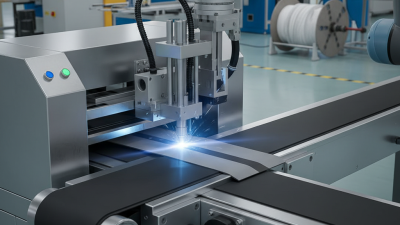
Green ultrasonic welding uses high-frequency vibration to join materials without traditional adhesives, solvents, or long heating cycles. In production trials, it joins thermoplastic housings, wire connections, textile layers, and filtration parts with limited material waste. The tool creates heat at the joint, so curing ovens and extra fasteners can often be avoided. This can reduce floor space and cycle time. The process is not automatically green. Electricity demand, compressed air, rejected parts, and tool wear still matter. That assumption needs testing.

Manufacturers increasingly apply this method to lightweight vehicle interiors, battery component enclosures, consumer electronics, and medical packaging. Engineers should verify weld strength, energy use, and recyclability together. A strong joint is not enough if the finished product cannot be separated or recovered. Plant teams can track energy per weld, scrap rates, cycle duration, and maintenance frequency. These measurements support credible environmental claims. Yet, real factory data is sometimes incomplete. That weakness should be acknowledged, not hidden.

Future ultrasonic welders will likely use connected sensors to monitor force, amplitude, energy, and temperature during every cycle. Closed-loop controls may correct small variations before they create visible defects. Machine-learning tools could predict horn wear and reduce unnecessary replacement. Useful, but not magic. Recycled polymers and bio-based materials will create new opportunities, although their inconsistent composition may complicate welding. More adaptable tooling, repairable equipment, and digital material records could improve long-term performance. Engineers will need practical testing, not optimistic assumptions.

China Top 10 Green Ultrasonic Welder Manufacturers - Applications and Future Trends of Green Ultrasonic Welding
Profile Primary Application Sector Typical Materials Common Welding Range Typical Equipment Configuration Green-Welding Contribution Key Future Trend
Manufacturer Profile 01 Automotive wire harnesses and electrical connectors Copper, aluminum, tinned copper, thermoplastics Small-to-medium wire bundles and terminal joints 20 kHz or 30 kHz ultrasonic system with digital amplitude control Solid-state joining without solder, flux, or additional consumables Closed-loop weld monitoring using force, energy, amplitude, and displacement data
Manufacturer Profile 02 Electric-vehicle battery modules and busbars Copper, aluminum, nickel-plated metals, battery tabs Thin foils, tabs, and multilayer current collectors 20 kHz high-power welding platform with programmable weld recipes Low thermal input helps reduce heat-affected areas around sensitive battery materials Automated inspection, traceability, and adaptive control for battery production lines
Manufacturer Profile 03 Consumer-electronics components ABS, PC, PP, PA, PVC, copper, and aluminum Small plastic housings, films, wires, and precision metal parts 30 kHz or 35 kHz precision system with compact tooling Short cycle times and clean assembly without adhesives or solvent emissions Miniaturized actuators, higher-frequency tools, and software-based process optimization
Manufacturer Profile 04 Medical devices and disposable healthcare products Medical-grade PP, PE, ABS, PC, PETG, and TPU Filters, tubing, fluid containers, and sealed plastic assemblies Cleanroom-compatible system with controlled pressure and documented parameters Dry joining process with no adhesive residue and limited material waste Validated digital records, recipe control, and support for connected quality systems
Manufacturer Profile 05 Packaging and food-container production PP, PE, PET, multilayer films, and nonwoven materials Film seals, lids, pouches, filters, and lightweight packaging parts 20 kHz or 30 kHz continuous or intermittent ultrasonic sealing system Eliminates hot plates, liquid adhesives, and some conventional sealing consumables Energy monitoring, recyclable mono-material packaging, and high-speed sealing automation
Manufacturer Profile 06 Solar photovoltaic and energy-storage components Copper, aluminum, coated metals, backsheets, and thermoplastics Busbars, connectors, cable assemblies, and selected polymer enclosures High-power system with custom sonotrode and fixture design Fast metal joining with reduced need for soldering materials and auxiliary chemicals Integration with robotic handling, inline electrical testing, and renewable-energy factories
Manufacturer Profile 07 Home appliances and consumer products PP, ABS, HIPS, PC, PA, and elastomer-based components Decorative panels, housings, valves, filters, and internal assemblies 15 kHz or 20 kHz system with custom fixtures for large plastic parts Reduced reliance on screws, clips, adhesives, and secondary finishing operations Multi-axis automation, digital twin simulation, and lower-noise machine design
Manufacturer Profile 08 Textiles, nonwovens, and technical fabrics Polyester, polypropylene, nylon, acrylic, and composite nonwovens Cutting, edge sealing, perforation, and layered fabric bonding 20 kHz rotary or continuous ultrasonic processing system Contact-based processing can reduce fraying and avoid thread, solvent, or liquid adhesive use Higher-throughput continuous systems for filtration media, hygiene products, and recyclable fabrics
Manufacturer Profile 09 Water-treatment, filtration, and plumbing components PP, PE, PVC, ABS, PVDF, and engineered thermoplastics Filter cartridges, membranes, fittings, valves, and pipe subassemblies 15 kHz or 20 kHz system with sealed fixtures and leak-test integration Clean, repeatable sealing with reduced use of chemical bonding agents Combined ultrasonic welding and automated pressure-decay or flow testing
Manufacturer Profile 10 Industrial sensors, instrumentation, and smart devices Engineering plastics, copper, aluminum, and flexible circuits Sensor housings, cable glands, micro-connectors, and protective covers 30 kHz or 35 kHz precision system with force and displacement feedback Repeatable low-consumable assembly suitable for compact, high-volume products Artificial-intelligence-assisted anomaly detection and cloud-based production analytics
Note: The ten entries are anonymized representative manufacturer capability profiles rather than ranked company records. Technical ranges and applications reflect commonly used industrial ultrasonic-welding practices; actual specifications depend on material combinations, joint design, part geometry, tooling, and process validation.