Choosing a Diy Ultrasonic Welder is not just a price comparison. Buyers must judge weld consistency, control options, spare-part access, and the supplier’s ability to explain setup requirements. The stakes are practical: a poorly matched horn can leave uneven seams on plastic parts, even when the machine appears powerful. Details matter.
Grand View Research’s ultrasonic welding machine market report describes demand across applications including automotive and electronics. Its market estimates indicate continued growth, but they do not tell buyers which supplier will provide reliable support or suit a small workshop. Market growth is useful context, not proof of product quality. That distinction is easy to miss.
Manufacturing quality expert W. Edwards Deming wrote, “Quality comes not from inspection, but from improvement of the production process.” His principle applies here: ask suppliers how they control parameters, test samples, and respond when weld results vary. This is not a specialist quote about DIY ultrasonic welding, but it offers a useful quality lens. A supplier should welcome specific questions.
This guide compares ten suppliers for global buyers, focusing on machine capability, customization, documentation, and after-sales service. Buyers should request sample welds using their own materials where possible. Small tests can reveal big gaps. No ranking can replace a hands-on evaluation, and supplier claims deserve verification before purchase.

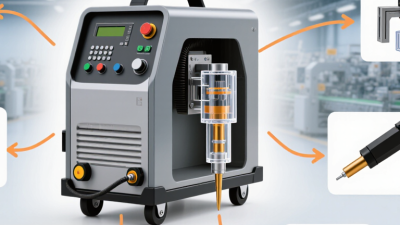
A DIY ultrasonic welder is a compact tool for joining compatible materials, most often thermoplastic parts. It uses high-frequency vibration, pressure, and carefully timed energy instead of glue or an open flame. No flame is involved. A typical setup includes a power supply, an ultrasonic transducer, and a shaped metal horn, also called a sonotrode.
The transducer converts electrical energy into rapid mechanical vibration. The horn transfers that vibration to the joint while a clamp holds the pieces together. At the contact area, vibration and material deformation generate heat, softening the plastic so its surfaces can fuse. The horn then stops, but pressure remains briefly while the joint cools. Small parts matter. A dusty seam or uneven clamp can make a weld weak, even when the machine sounds normal.
For practical DIY work, material choice and joint design are as important as machine power. Similar plastics with clean, close-fitting edges are generally easier to weld than mixed materials or thick, irregular parts. Operators often need to adjust pressure, vibration time, and fixture alignment through controlled trials. This takes patience. A short test weld may look neat but still fail under a gentle pull. Ultrasonic welding is not a universal fix, and home-built systems can behave inconsistently; guarding, stable clamping, and careful testing deserve attention before regular use.
Ultrasonic welders use high-frequency mechanical vibrations to create frictional heat at a joint, bonding compatible materials under pressure. The chart shows common nominal frequencies used in ultrasonic welding equipment; it is not a supplier ranking or a performance comparison. The appropriate frequency depends on the materials, part geometry, and tooling.
When evaluating a Chinese DIY ultrasonic welder supplier, start with the joint, not the catalog. Ask whether the machine suits your plastic type, part geometry, and daily production volume. A capable supplier should explain frequency, power, horn design, and fixture requirements in plain terms. Bring sample parts.
Request trial welds and inspect them under repeatable conditions. Check seam appearance, pull strength, cycle time, and consistency across several runs. Ask for process settings, operator instructions, maintenance intervals, and spare-part lead times in writing. Clear records matter. A polished demonstration is useful, but it cannot replace testing your own parts.
Compare quotations by scope, not price alone. Tooling, commissioning, training, warranty coverage, and remote support can change the real cost. Confirm how faults are handled and how replacement transducers can be supplied across time zones. Review the factory’s quality checks and request references for similar applications. One practical complication: custom horns may need adjustment after shipment, so allow time and budget for tuning. If technical answers stay vague, pause before ordering.
Chinese suppliers of DIY ultrasonic welders range from compact-kit makers to automation integrators. These profiles describe ten common supplier types, not an audited ranking. MarketsandMarkets estimated the ultrasonic welding market would grow from USD 1.2 billion in 2022 to USD 1.7 billion by 2027. That forecast signals demand, but it does not verify any supplier’s quality.
East China integrators often configure benchtop systems for varied plastics.
Shenzhen electronics specialists focus on small housings and repeatable cycle controls.
Ningbo manufacturers commonly serve general plastic components.
Dongguan horn workshops offer custom tooling, while Suzhou precision teams emphasize alignment and dimensional checks.
Guangzhou suppliers may adapt welders for packaging lines.
Wenzhou vendors often target simpler, lower-cost setups.
Xiamen exporters tend to prepare documentation for overseas buyers.
Qingdao fixture makers can support larger workpieces.
Chengdu service-oriented suppliers may offer commissioning and operator training.
Ask each supplier for weld samples using your own material and joint design.
Request horn drawings, power specifications, cycle records, and spare-part lead times.
A polished brochure is not proof.
Confirm whether the quoted machine includes a generator, fixture, and safety enclosure.
Some small suppliers respond quickly but provide thin validation data; that gap deserves attention before purchase.
When comparing China’s top DIY ultrasonic welder suppliers, look beyond the advertised power rating. Check whether the machine supports your material, part size, and planned production volume. Ask for details on frequency, pressure adjustment, cycle controls, and horn compatibility. A clear control panel helps during setup, but it cannot compensate for poorly matched tooling. Fit matters.
Pricing comparisons need the same level of detail. A low equipment quote may exclude the horn, fixture, installation guidance, or spare parts. Request an itemized offer, including packaging and shipping terms, then compare warranty coverage and service response times. If possible, send representative plastic parts for a sample weld and request photos or test notes. The result may still differ at your own site; that uncertainty deserves attention.
Export support can save time after the machine leaves the factory. Ask whether the supplier provides an English manual, wiring diagrams, remote troubleshooting, and replacement components with clear part numbers. Confirm how the machine will be crated and what documents accompany the shipment. Ask for proof, not promises. Response quality during quotation is useful evidence, though it is not a guarantee of later support. My comparison would remain provisional until tooling, sample results, and after-sales commitments are checked together.
This is a supplier-comparison template, not a verified ranking. Supplier-specific prices, capabilities, certifications, and export services should be confirmed directly; no company or brand claims are made here.
| Supplier Slot | Configuration to Compare | Key Product Features to Confirm | Pricing Information | Export Support to Verify | Buyer Checks |
|---|---|---|---|---|---|
| Supplier 1 | Bench-top, manually operated welder | Operating frequency, rated power, control method, horn compatibility, and safety interlocks | Request a written quotation; price depends on configuration and tooling | Confirm export packing, shipping terms, documentation, and warranty coverage | Request a sample weld and machine specifications |
| Supplier 2 | Compact pneumatic press system | Press force range, stroke adjustment, air-pressure requirements, and cycle controls | Request an itemized quote including generator, press, and standard accessories | Check available manuals, remote commissioning, and spare-parts shipment options | Confirm local air supply and electrical requirements |
| Supplier 3 | Digital-control benchtop system | Weld-time or energy settings, display functions, parameter storage, and overload protection | Ask for pricing by power rating and control options | Verify English-language documentation and destination-country voltage compatibility | Request a demonstration of the control interface |
| Supplier 4 | Handheld ultrasonic welding system | Handpiece ergonomics, cable length, trigger controls, and intended duty cycle | Request separate pricing for the generator, handpiece, and horn | Confirm packaging protection and availability of replacement handpieces | Check suitability for the material and joint design |
| Supplier 5 | System with custom horn and fixture support | Horn material, fixture design, drawing review, and tooling validation process | Request tooling costs and lead times as separate quote lines | Check whether export documents cover both the machine and custom tooling | Send part drawings and sample materials before ordering |
| Supplier 6 | Welder with PLC or external-control interface | Input/output signals, communication options, cycle feedback, and integration documentation | Request pricing for the base unit and any integration options | Confirm remote engineering support and documentation language | Have the buyer’s controls engineer review interface details |
| Supplier 7 | System with weld monitoring or quality controls | Available monitoring parameters, alarm functions, data output, and repeatability documentation | Ask which monitoring features are included and which are optional | Verify software access, update policy, and post-sale technical support | Request a test report using representative parts |
| Supplier 8 | Higher-duty production configuration | Duty-cycle rating, cooling requirements, service intervals, and component availability | Request a quotation based on expected operating hours and application | Check spare-parts lead times and warranty service for the destination market | Validate production capacity with an application-specific trial |
| Supplier 9 | Custom-frequency or application-specific system | Frequency selection, transducer specifications, horn design, and material compatibility evidence | Request a project-specific quote; do not compare base prices without matching scope | Confirm engineering communication, delivery terms, and acceptance criteria | Ask for documented trials on the intended material combination |
| Supplier 10 | DIY or integration-ready component package | Generator, transducer, booster, horn, wiring, and assembly documentation included in the package | Request a complete bill of materials and confirm exclusions before comparing quotes | Check export packing, parts labeling, and technical support for self-assembly | Confirm component compatibility and required electrical safety provisions |
For an evidence-based supplier ranking, compare current written quotations, verified factory details, application test results, certification documents, warranty terms, and references relevant to the destination market.
Global buyers should verify a DIY ultrasonic welder supplier through evidence, not polished catalog photos. Ask for the machine’s frequency, power range, horn material, operating limits, and supported workpiece dimensions. Request weld samples made from your own materials. Inspect joint consistency, surface marks, and repeatability across several cycles. Paper is not proof. A live video test can show setup and safety controls, but an independent sample review is stronger.
Allied Market Research’s 2021 ultrasonic welding market report valued the global market at about US$1.3 billion in 2021 and forecast US$2.1 billion by 2031, with a 4.8% compound annual growth rate. This is a market forecast, not evidence that any supplier meets a buyer’s needs. Check quality certificates with their issuing bodies, and request dated inspection records, calibration details, and a written warranty. I still treat even complete paperwork as a starting point.
Before paying, compare quotations line by line: tooling, installation, training, spare parts, packaging, and delivery terms. Ask how quickly the supplier can replace a damaged horn or controller, and whether operating instructions are available in clear English. Confirm the exact model and acceptance criteria in the purchase agreement. If possible, arrange a factory audit or third-party pre-shipment inspection. Keep a record of test settings and sample results; small differences can matter.